
18
August, 2026
Inside TAAL Tech’s Scaled Multidisciplinary Engineering Delivery for a Large-Scale AI/HPC Data Center
A large-scale AI/HPC data center program needed considerably more than additional drafting bandwidth. Engineering had to scale simultaneously across cooling, power, plumbing, ELV and BIM while keeping those workstreams coordinated as detailed design progressed.
TAAL Tech responded with a multidisciplinary team delivering data center engineering services across design, calculations, modeling, coordination and project documentation.
For the client, the outcome was straightforward: additional engineering capacity across several critical disciplines through one integrated delivery structure.
The Requirement Was Data Center Engineering Capacity, Not Simply More Resources
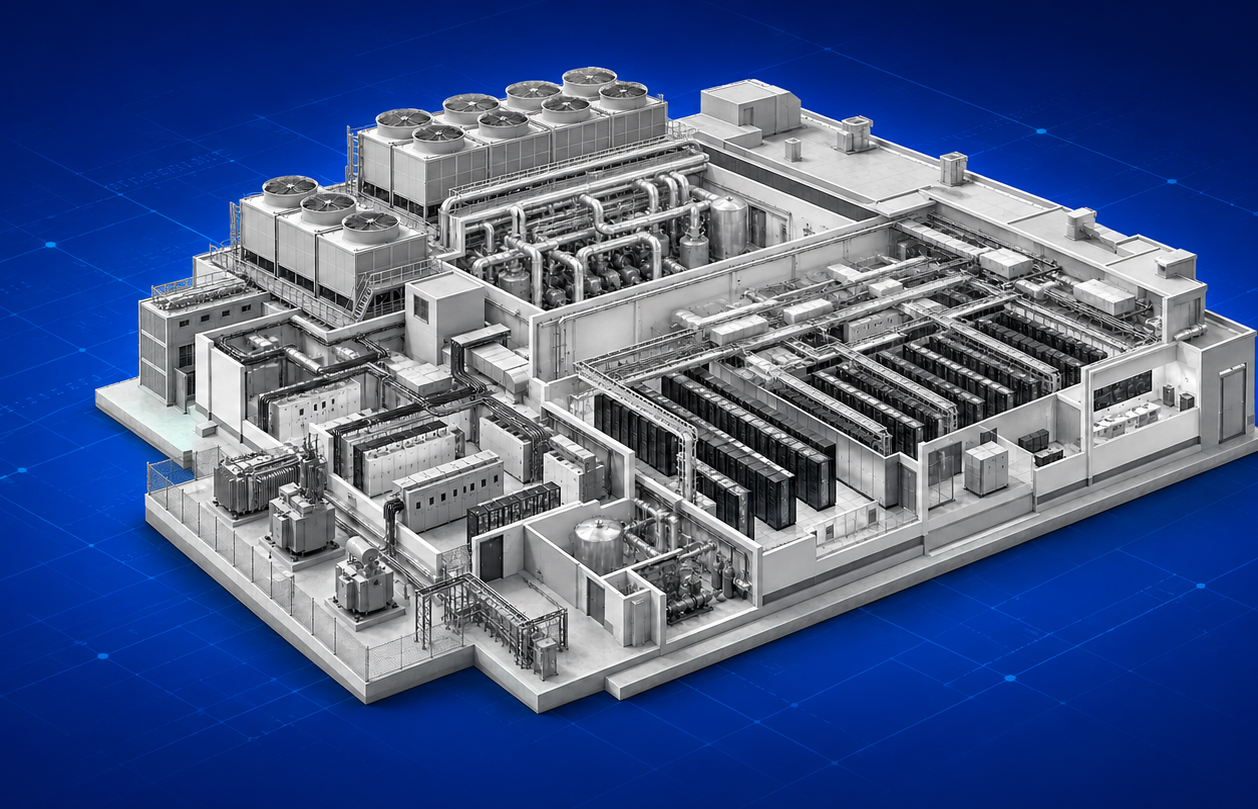
The facility was being developed for high-performance computing and AI workloads using GPU-intensive infrastructure, with operations targeted for 2026.
That translated into a sizeable AI data center engineering workload.
Cooling systems had to support demanding compute requirements. Electrical infrastructure needed to accommodate power distribution, UPS, critical power and emergency systems. Plumbing, drainage and ELV systems had to be fitted into a building already carrying dense mechanical and electrical infrastructure.
And all of it had to come together in coordinated models and construction documentation.
This was therefore not a conventional resource-augmentation requirement.
The client needed data center engineering outsourcing that could support multiple disciplines at the same time without creating a separate management and coordination burden around each one.
TAAL Tech structured its delivery accordingly.
Scaling Data Center MEP Design Through One Multidisciplinary-Member Team
The delivery model was structured around the project’s multidisciplinary engineering workload, bringing together HVAC, electrical, plumbing and ELV engineering and design within one coordinated team.
Dedicated BIM and project coordination supported these disciplines, helping engineering decisions, model development and interface management progress within the same delivery structure.
For the client, this meant access to an integrated data center MEP design capability rather than separate modeling resources working from mark-ups generated by different internal teams.
The delivery environment included Revit, Navisworks, HAP, AutoCAD, Dialux, Visual Lighting, Hydra Calcs and Bluebeam. This enabled calculations, discipline engineering, modeling and multidisciplinary coordination to move forward in parallel, with fewer handoffs between engineering and production activities.
Data Center HVAC Design Extended From Calculations to Detailed Modeling
Cooling represented one of the largest workstreams within the engagement.
TAAL Tech’s data center HVAC design scope included:
- Mechanical plant and cooling-system modeling
- Data hall cooling coordination
- Heat-load, airflow and cooling-load calculations
- Mechanical equipment selection and sizing
- Chilled-water and cooling-water piping design
- Supply, return and outdoor-air duct design
- Mechanical-room and plant coordination
- N+1 redundancy and reliability planning
- Riser diagrams and system schematics
- Equipment schedules, BOMs and technical specifications
- Detailed HVAC models and drawings
The commercial value of this breadth becomes clearer when viewed from the client’s side.
The customer did not need one supplier for HVAC calculations, another team for Revit modeling and yet another resource group to coordinate the resulting model.
These activities sat within the same data center engineering services engagement.
When sizing, routing or equipment decisions changed, the engineering and design resources supporting those changes were already part of the same delivery organization. That is materially different from outsourcing isolated production tasks.
Data Center Electrical Design Progressed Alongside the Cooling Infrastructure
The electrical team supported another substantial part of the facility engineering.
The data center electrical design scope covered:
- Power-distribution system design
- Load analysis and electrical calculations
- UPS and critical-power design
- Generator and emergency-power design
- Lighting and small-power systems
- Single-line diagrams
- Electrical schematics
- Equipment schedules, BOQs and technical specifications
TAAL Tech also developed electrical equipment models, power-distribution models, cable-tray and conduit layouts, data hall power infrastructure and electrical-room coordination. Cable trays, chilled-water routes, equipment access, electrical rooms, risers and structural constraints all competed for physical space.
By supporting both mechanical and electrical workstreams, TAAL Tech’s multidisciplinary engineering services helped keep these interfaces within a common delivery environment.
For the client, that meant engineering capacity could increase without introducing another layer of disconnected discipline vendors.
Plumbing Added Another Critical Layer to Data Center MEP Design
The plumbing engineering scope included:
- Domestic-water system design
- Sanitary and vent systems
- Stormwater drainage
- Water-demand and pipe-sizing calculations
- Equipment and fixture selection
- Riser diagrams and plumbing schematics
- Equipment schedules, BOQs and technical specifications
- Domestic-water and sanitary-system modeling
- Roof and stormwater-drainage modeling
- Riser and shaft coordination
- DD/CD drawing production
- Quantity take-offs and BIM deliverables
In a dense AI/HPC facility, these systems cannot simply be developed separately and inserted into the model at the end.
They occupy the same shafts, ceilings, plant spaces and service zones as HVAC, electrical and ELV systems. This is one reason data center MEP design benefits from an integrated delivery approach. The issue is not whether each individual discipline can be designed correctly. The issue is whether all of those technically correct systems can coexist in the available space and remain constructible.
BIM Coordination Services Were Embedded Into Engineering Delivery
TAAL Tech provided dedicated BIM coordination services across the project, covering interdisciplinary coordination, clash detection, clash resolution and model validation.
The distinction is important. BIM was not being used simply as a final check after the major engineering decisions had already been completed.
HVAC, electrical, plumbing and ELV models were developed within the coordinated environment, allowing spatial conflicts and routing dependencies to be addressed as the design progressed.
A chilled-water route, for example, could affect cable trays. A revised electrical route could influence plumbing space, equipment access or riser allocation. Those decisions then had to remain aligned across the models, drawings and schedules.
Integrating BIM coordination services with the discipline engineering teams helped keep that process within one project delivery structure. For a client considering data center engineering outsourcing, this is an important difference. More external resources are useful only when someone is also taking responsibility for the interfaces between them.
The Business Outcome
- Multiple disciplines could scale together
The client did not have to solve individual resource gaps one department at a time.
HVAC, electrical, plumbing and ELV capacity could be expanded within the same delivery model, supporting a broader HPC data center engineering requirement.
- Engineering and production capability remained connected
The scope did not stop at Revit modeling.
Calculations, system engineering, equipment selection, routing, modeling, coordination, DD/CD drawings, schedules, quantities and specifications were all part of the delivery.
That allowed TAAL Tech’s data center engineering services to support meaningful work packages rather than only individual drafting activities.
- Fewer external delivery interfaces had to be created
Had each discipline been sourced independently, the client would also have needed to manage the interfaces between several external teams.
Instead, the multidisciplinary resources sat within one TAAL Tech delivery organization, supported by BIM and project coordination.
That does not remove the client’s engineering governance. It changes how much day-to-day delivery complexity has to be assembled around outsourced capacity.
- Capacity could be added without building an equivalent internal organization
Scaling internally is not simply a matter of hiring engineers. The organization also needs designers, BIM capability, software environments, coordination processes and project management around those people.
Through this data center engineering outsourcing model, the client could access a functioning multidisciplinary engineering team while maintaining its own program oversight and technical governance.
What This Engagement Says About Data Center Engineering Outsourcing
For engineering leaders evaluating potential outsourcing partners, team size alone is a weak metric.
A provider may be able to mobilize 20 or 30 resources quickly. That says little about how much engineering responsibility those resources can actually absorb.
The more useful question is:
How much of the work package can the external team own?
In this engagement, TAAL Tech supported:
- Engineering calculations
- System design and development
- Equipment selection
- 3D modeling
- Interdisciplinary coordination
- Clash resolution
- DD/CD drawing production
- Schematics and risers
- Equipment schedules
- BOQs and BOMs
- Technical specifications
- Quantity take-offs
- Model validation
That breadth is what turns data center engineering outsourcing from additional manpower into additional delivery capacity. It also reflects the difference between buying isolated drafting hours and engaging a provider of multidisciplinary engineering services.