
3
November, 2026
5 Signs Your Plant Layout Is Holding Back Production Capacity
A manufacturing plant may have modern equipment, experienced operators, and healthy production demand, yet struggle to meet its output targets. The problem could be hiding in its layout.
A study published in the International Journal of Production Research demonstrated how optimizing material movement routes reduced travel distances by 15% at a fertilizer manufacturing facility.
It raises an important question: Could an inefficient plant layout be preventing manufacturers from getting more out of their existing infrastructure?
Here are five warning signs worth examining.
1. Materials Travel Further Than They Should
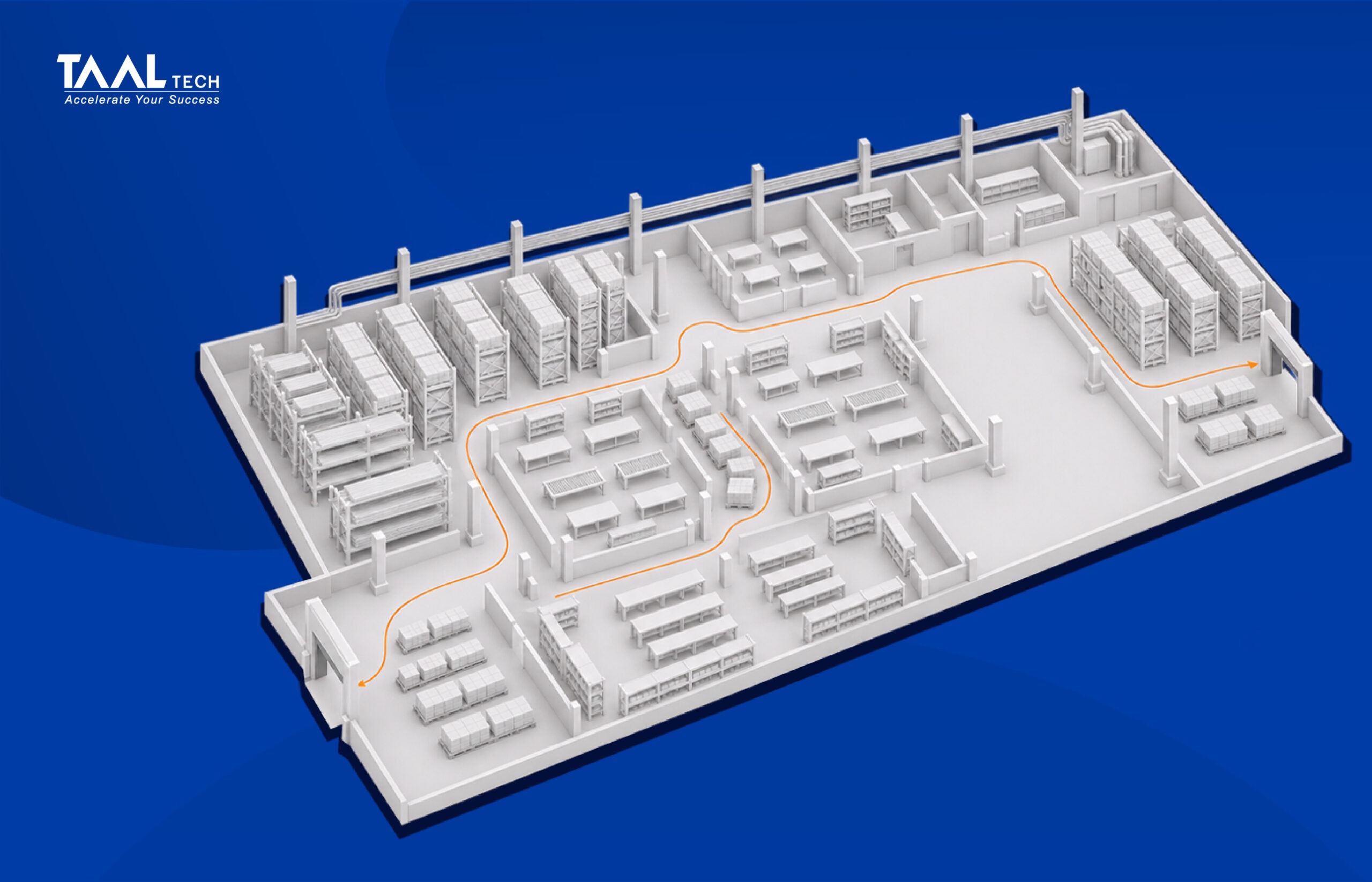
Track a component from raw material storage to finished goods. Does it move smoothly between production stages, or does it constantly return to the same areas?
The amount of material movement can be an indicator of inefficient plant layout even if individual machines are producing at maximum output. Work stations may not be optimally positioned to minimize material movement, increasing handling costs and WIP.
What Should Manufacturers Examine?
Assessing material flow goes beyond the simple distance between machines. Key aspects that need to be assessed by the engineering department are:
- Transportation routes between production stages
- Repeated movement through the same areas
- Material handling equipment utilization
- Waiting time at transfer points
- Opportunities to position related operations closer together
The aim of reducing material movement is to balance minimizing distance with maintaining access for service and flexibility.
2. Production Bottlenecks Keep Moving Between Workstations
The production line is constantly behind schedule even though the individual machines are operating within their specified cycle times.
Components pile up near the machining area one week, and the assembly area gets congested the following week. Operators are running around with more materials, and the supervisors are constantly changing the production schedule.
The symptoms described above are caused by a mismatch of process capacity, material flow, and workstation arrangement.
Why Adding More Equipment May Not Help
More machining capacity does not necessarily lead to more production if, for example, the subsequent inspection stations are not designed to handle the increased volume of production.
It is very important to analyze the cycle times, the queue lengths, the equipment utilization, and the process dependencies in order to increase the production output of a company.
Identify the bottleneck in the production flow before purchasing new equipment or rearranging existing equipment.
3. Your Facility Feels Crowded Despite Having Available Floor Space
A plant may have plenty of unused floor space but still be struggling with congestion.
Temporary storage areas become permanent fixtures. Finished goods are stored in areas that should be clear for people to move. Maintenance staff are unable to get to machinery, and forklift drivers have to drive down increasingly narrow lanes.
This is especially true in brownfield sites, where production demands change over time and equipment is added on an ongoing basis over several years.
Is the Available Space Being Used Effectively?
An effective plant layout goes beyond the area of equipment and must account for space required for maintenance, material staging, safe movement of people and products, and future modifications.
Industrial plants should be set out to facilitate a logical material flow, i.e. from the receipt of raw materials through to the dispatch of finished goods, whilst allowing for safe movement and access.
Installing more equipment in a brownfield expansion can initially seem straightforward until all the piping, maintenance access and material movement corridors are taken into account.
At TAAL Tech, our multidisciplinary approach to plant layout engineering helps our customers to assess constraints at an early stage, in order to avoid installation problems.
4. Operators Spend Too Much Time Walking, Waiting, or Retrieving Materials
Production efficiency depends on how operators interact with machines, tools, and materials throughout a shift.
When frequently used components are stored far from their point of use, operators spend valuable time moving between workstations. Poor access to tools and consumables can also interrupt otherwise efficient production operations.
The National Institute of Standards and Technology (NIST) identifies unnecessary movement, transportation, and waiting among the activities that lean manufacturing seeks to eliminate.
Small Delays Can Accumulate
Even a few minutes spent retrieving materials repeatedly during a shift can add up to significant non-productive time across multiple workstations.
Manufacturers can examine workstation accessibility, point-of-use storage, and material replenishment routes to identify opportunities for improvement.
However, shorter walking distances alone do not guarantee higher production output. The real benefit depends on whether the recovered time can improve operator productivity or remove a constraint in the production process.
5. Every Production Expansion Requires Major Layout Changes
One of the strongest indicators of an inflexible plant layout appears when manufacturers attempt to increase capacity.
Adding a production line requires relocating existing equipment. Installing new machinery involves extensive utility rerouting. A seemingly straightforward expansion creates conflicts with structural elements, piping systems, or maintenance access.
Such challenges can increase engineering effort, capital expenditure, and production disruption.
Designing for Future Capacity
Plant engineering teams should consider how facilities can accommodate equipment additions, changing production volumes, and evolving manufacturing processes.
For brownfield facilities, this involves assessing several engineering requirements:
- Available space for new equipment installations
- Existing piping and electrical infrastructure
- Structural load capacities and equipment foundations
- Maintenance access and material handling requirements
- Opportunities for phased expansion with limited disruption
Developing 3D plant layout alternatives can help engineering teams identify potential conflicts and evaluate expansion options before physical modifications begin.
A well-planned layout should accommodate reasonable future changes without requiring extensive redesign every time production requirements evolve.
How Can Manufacturers Evaluate Their Existing Plant Layout?
Recognizing these warning signs is only the beginning. The next step is understanding how much they affect production capacity.
A plant layout assessment should combine operational data with a detailed review of the physical facility. This allows manufacturers to distinguish layout-related inefficiencies from equipment limitations, staffing constraints, and process-related issues.
Five Areas Worth Measuring
| Assessment area | Key parameters |
| Material movement | Travel distance, handling time, transfer frequency |
| Production flow | Cycle times, waiting time, WIP accumulation |
| Space utilization | Equipment footprint, access clearances, available floor space |
| Operator efficiency | Walking time, material retrieval, non-value-added activities |
| Expansion readiness | Available capacity, utility constraints, modification requirements |
Digital plant models, equipment layout studies, and material flow assessments can help engineering teams compare alternatives before implementation.
However, layout modifications must also be evaluated against installation costs, production downtime, safety requirements, and expected capacity improvements. An arrangement that reduces travel distance may still prove unsuitable if it restricts maintenance access or introduces new production constraints.
How TAAL Tech Supports More Efficient Plant Layouts
Improving an existing manufacturing facility requires a clear understanding of production requirements, infrastructure limitations, and operational dependencies.
At TAAL Tech, we bring multidisciplinary plant engineering capabilities to help manufacturers assess existing facilities, evaluate equipment arrangement alternatives, and plan brownfield modifications.
Our capabilities include:
- Plant layout engineering: Developing equipment arrangements that consider production flow, access, and space requirements.
- 3D plant modeling: Visualizing existing conditions, proposed modifications, and potential engineering conflicts.
- Piping design and engineering: Assessing piping routes and integration requirements during layout changes.
- Structural engineering: Evaluating structural considerations associated with equipment installations and modifications.
- Brownfield modification engineering: Supporting plant modernization and capacity expansion within existing infrastructure.
By coordinating these engineering disciplines, we help manufacturers make informed decisions about facility modifications, minimize avoidable design conflicts, and improve the use of their existing infrastructure.