

15
September, 2026
Why Engineering Capacity Is Becoming the Bottleneck in Aerospace Production Ramp-Ups
The global aircraft backlog now exceeds 18,000. Yet adding machines and suppliers will not accelerate deliveries if manufacturing engineering cannot keep pace. Every work transfer requires process plans, tooling, CNC programs, inspection strategies and production documentation before the first conforming part can be made.
As aerospace manufacturing expands across suppliers and regions, engineering readiness is becoming a decisive factor in production ramp-up.
Every Work Transfer Creates an Engineering Requirement
A work transfer does not begin when the first component reaches the machine. It begins when product definition has to be translated for a new manufacturing environment.
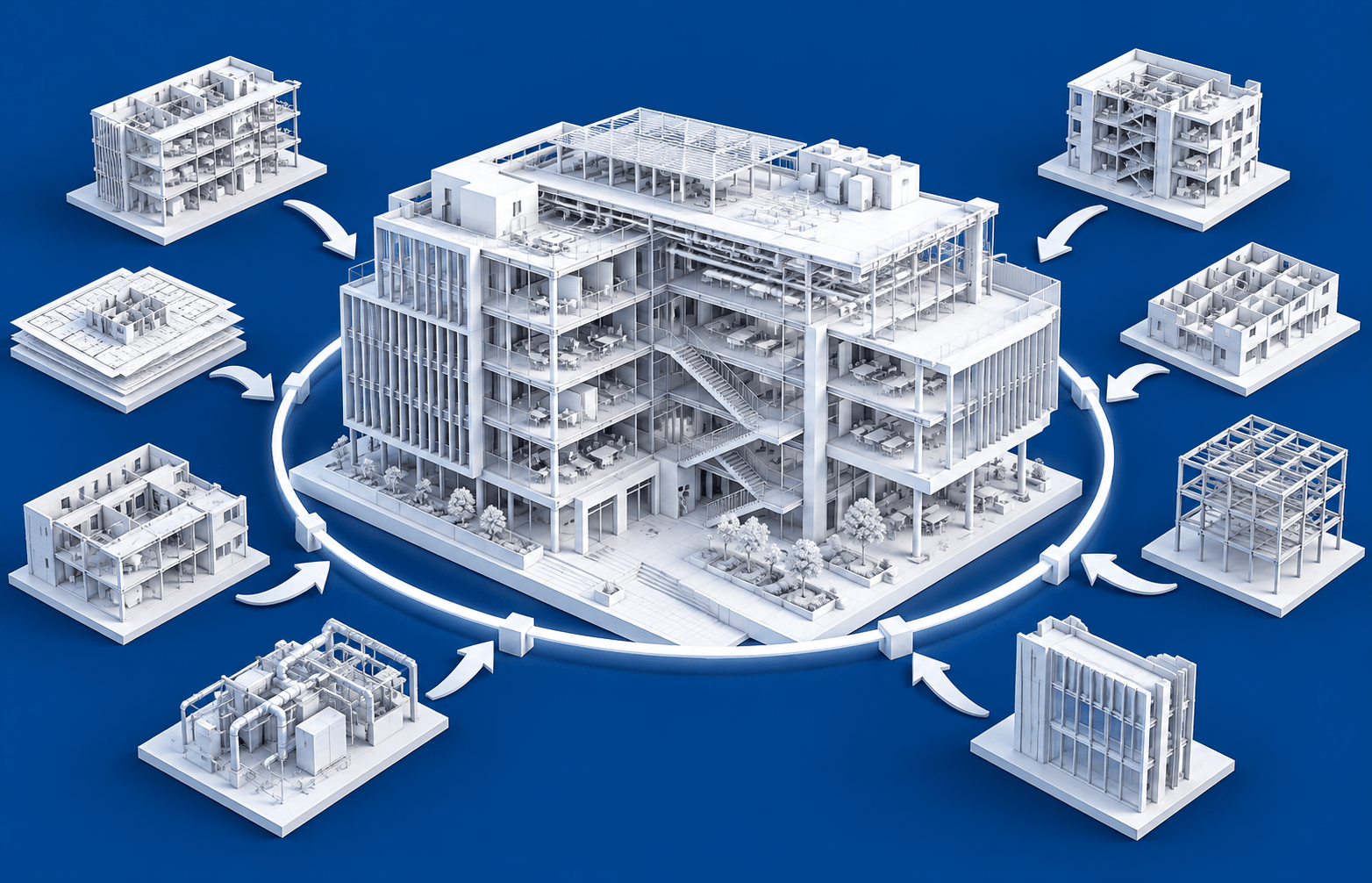
The incoming supplier may need to complete or update:
- Manufacturing feasibility studies
- Process planning and methods engineering
- EBOM-to-MBOM transformation
- Tool and fixture design
- CNC programming
- Cutting-tool and machining strategies
- Simulation and program verification
- Inspection planning
- CMM programming
- Manufacturing documentation
- First Article Inspection support
- Engineering change incorporation
These activities are interconnected. A change in machine selection can affect fixturing, cutting tools, CNC programs, cycle times and inspection strategy. An incomplete MBOM can disrupt material planning. An unresolved datum interpretation can travel from programming into inspection and First Article Inspection.
The transfer therefore creates an engineering workload before it creates production output.
For complex machined parts, assemblies or aerostructures, this workload can be substantial. If it is underestimated, machines may be installed and operators may be available while the work package remains unready for release.
Why Work Transfer Is Increasing
Aerospace supply chains are being reshaped by high backlogs, production-rate targets, capacity constraints and the need to reduce dependence on individual suppliers or regions.
OEMs and Tier 1 companies are expanding their supplier bases, qualifying additional manufacturing locations and moving selected work packages closer to capable engineering and production ecosystems.
India is gaining a larger role in this shift. Airbus has awarded Indian companies contracts for metallic detail parts, components and assemblies across the A320neo, A330neo and A350 programs. In announcing these awards, Airbus specifically highlighted the development of both manufacturing and engineering capabilities within its Indian supplier ecosystem.
Reports in 2025 also indicated that Airbus intended to increase annual sourcing from India from approximately $1.4 billion in 2024 to $2 billion by 2030. This points to a broader change in India’s position within the aerospace value chain, from an additional source of production capacity to an increasingly important industrial and engineering base.
However, sourcing more components from a region also means industrializing more components within that region.
A part previously produced in Europe or North America may retain the same approved product definition when it moves to India. The production route will still need to be adapted to the receiving supplier’s machines, tools, fixtures, software, metrology equipment and quality system.
The geometry may remain unchanged. The manufacturing definition cannot simply be copied across.
The Hidden Work Behind Production Ramp-Up
Consider a Tier 1 supplier transferring 100 components to a new manufacturing partner as part of a rate increase.
The first capacity assessment will typically examine machine type, spindle availability, operating hours, labor and floor space. These are necessary questions, but they do not show whether the components are ready to enter production.
The workload is rarely uniform. A relatively simple prismatic part and a thin-walled, multi-axis structural component should not be treated as two identical line items in a transfer plan.
Leaders therefore need visibility beyond the number of parts being transferred. They need to understand engineering hours by part family, the readiness of source data, reusable process knowledge, tooling lead times, programming complexity and the approval path for each deliverable.
Machines can be available from day one. Engineering maturity rarely is.
This is where a production ramp can encounter a hidden bottleneck. Physical capacity has been secured, but the engineering needed to activate it is still moving through feasibility, definition, validation or release.
Manufacturing Engineering Is the Bridge Between Design and Production
Design engineering defines the approved product. Production manufactures it. Manufacturing engineering converts one into a controlled, repeatable process for the other.
That requires decisions such as:
- What manufacturing sequence will provide the required quality and repeatability?
- Which machines, tools and fixtures are suitable?
- Where are the critical characteristics and process risks?
- How should the CNC strategy balance stability, cycle time and tool life?
- How will distortion, accessibility and tolerance stack-up be managed?
- Which inspection stages are required?
- How will the process be validated, documented and released?
These are not administrative steps around production. They determine whether production can begin reliably and whether it can remain stable as volumes rise.
This distinction matters during a ramp-up. A successful trial component does not automatically prove that a process is ready for sustained output. The process must also be repeatable, inspectable, traceable and robust enough to perform across operators, batches and shifts.
Additional machines create potential capacity. Manufacturing engineering converts that potential into an approved production system.
The Engineering Capacity Gap
Many work transfers involve mature aerospace components. The design may have been approved years ago, and the component may already have a long production history.
That can create the impression that the transfer will be relatively straightforward. In practice, maturity of design does not eliminate the need for industrialization at the receiving site.
Legacy knowledge may also be distributed across drawings, models, programs, inspection reports, tooling records and the experience of individuals at the source location. If that knowledge is incomplete or poorly structured, the receiving team must reconstruct part of the manufacturing intent.
The engineering challenge is to preserve the approved product definition while establishing a process suited to the new production environment.
The capacity plan must account for this work early. Otherwise, engineering becomes the queue through which every transferred component must pass.
More Manufacturing Locations Mean More Engineering Interfaces
Distributed manufacturing also increases the number of interfaces that must remain aligned.
A component may be designed in one country, industrialized in another, manufactured at a third location and integrated into an aircraft elsewhere. Across that journey, information moves between:
- Design engineering
- Manufacturing engineering
- Production teams
- Suppliers
- Quality teams
- Tooling specialists
- Inspection and metrology teams
- Program management
Every interface creates the possibility of delay or rework. A revised model may not reach the CNC programming team. A tooling change may not be reflected in the work instruction. An inspection program may be based on a previous drawing revision. A deviation accepted for one site may be interpreted differently at another.
Configuration control and engineering change management are therefore central to production performance.
During a work transfer, leaders need clear answers to three questions:
- Which product and manufacturing definition is authoritative?
- Who owns each engineering deliverable and interface?
- How quickly can a change be assessed and incorporated across tooling, programming, inspection and documentation?
The manufacturing footprint can be distributed. The engineering process must remain connected.
Why India Has an Opportunity
India already has an established base of aerospace OEM operations, Tier 1 suppliers, precision manufacturers and engineering service providers. The next opportunity lies in pairing manufacturing growth with the engineering capacity needed to industrialize and sustain that growth.
This goes beyond conventional resource augmentation. Global aerospace companies need engineering teams that can work within controlled environments, understand aerospace quality requirements and take ownership of defined manufacturing engineering work packages.
The value is particularly clear during large work transfers. A scalable engineering team can assess part families, establish common methods, reuse validated knowledge and progress multiple deliverables in parallel. This can help prevent CNC programming, tooling or inspection planning from becoming the critical path after production assets have already been committed.
India’s opportunity is therefore larger than absorbing additional manufacturing volume. It can become an integrated extension of global manufacturing engineering organizations, helping connect product definition, industrialization and production across locations.
The New Aerospace Capacity Equation
For decades, aerospace capacity planning has concentrated on factories, machines, materials and shop-floor labor. Those remain fundamental, but they do not provide a complete picture of ramp readiness.
A more useful equation is:
Production Capacity = Machines + People + Materials + Engineering Readiness
Engineering readiness determines whether the other elements can operate as a qualified production system.
It should be assessed through measurable indicators, including:
- Percentage of parts with approved process plans
- CNC program completion and verification status
- Tooling design, manufacture and prove-out progress
- Inspection plan and CMM program readiness
- EBOM-to-MBOM maturity
- Open engineering queries by severity
- First Article Inspection status
- Engineering change incorporation time
These indicators give program leaders a clearer view of whether a ramp is genuinely ready or whether capacity exists only on paper.
The question is no longer limited to, “How many more machines do we need?”
It must also include, “How much manufacturing engineering capacity is required to make those machines productive, and when must that capacity be available?”
Where TAAL Tech Fits
At TAAL Tech, we work at the point where product definition has to become an executable manufacturing process.
We support aerospace customers across manufacturing engineering, methods engineering, EBOM-to-MBOM transformation, tooling and fixture design, CNC programming, CMM programming, metrology and digital manufacturing.
For work transfers and production ramp-ups, this can mean taking ownership of defined engineering work packages, scaling capacity around program demand and maintaining continuity between design, manufacturing, tooling, inspection and documentation teams.
The objective is to shorten and control the path from:
Design → Manufacturing Definition → Tooling → CNC Programming → Inspection → Production
The industry will continue investing in factories, machines and supplier capacity. Yet the speed of the next production ramp will depend heavily on what happens before a machine begins cutting metal.
As more work moves between suppliers and geographies, aerospace companies that scale engineering capacity alongside manufacturing capacity will be better placed to convert investment into stable production, without allowing industrialization to become the next constraint.