
10
September, 2026
BIM Production Services for Architecture Firms: Scaling Delivery Without Losing Design Control
Architecture firms rarely face a constant production workload.
Several projects may reach documentation simultaneously, a large program may accelerate, or an approval milestone may require more model and drawing capacity than the internal team can provide.
The decision to extend delivery capacity is straightforward. Preserving design ownership, model quality, and review efficiency requires a more deliberate structure.
The Capacity Gap Is Often Temporary and Highly Specific
In May 2026, 23% of architecture firms surveyed by the American Institute of Architects reported being understaffed. Among those firms, the average gap was four full-time architectural positions. AIA also found that 63% of responding firm leaders considered recruitment a current problem.
The numbers show only part of the delivery challenge.
A firm may have enough designers while lacking production capacity at a particular project stage. It may need additional Revit resources for eight weeks, experienced documentation teams for a multi-building program, or specialized support to convert an established design into coordinated permit sets.
Permanent hiring is not always the closest match to that workload.
BIM production services can provide targeted capacity, but the engagement needs to be organized around project decisions rather than a simple volume of modeling hours.
Design Authority and Production Ownership Need Clear Boundaries
External delivery works best when the architecture firm retains clear control over design intent while the production team has enough authority to complete an agreed scope efficiently.
One workable division may look like this:
| Architecture firm retains | Production partner delivers |
| Design direction | Model development |
| Client decisions | Drawing production |
| Code strategy | Schedule and sheet updates |
| Material and system selection | Detail development |
| Final technical approval | Model and drawing QA |
| Change authorization | Controlled implementation |
The exact split varies by project. The important point is that every decision has an owner.
If the external team must seek approval for routine production choices, delivery slows and the internal review burden grows. If design decisions are delegated without clear boundaries, consistency begins to drift.
Effective BIM outsourcing for architecture firms depends on defining which decisions are fixed, which can be developed, and which must return to the design lead.
The Project Standard Must Be Usable
A BIM execution plan, model template, and drawing standard may exist without giving a production team enough information to work independently.
The delivery package should establish:
- Model structure and worksets
- File naming and publishing rules
- Family and content standards
- View and sheet organization
- Level of information required
- Annotation conventions
- Approved detail sources
- Coordination process
- Review and issue workflow
This is particularly important when Revit modeling services begin during detailed design.
If standards are communicated mainly through markups after work is produced, the architecture firm spends review time correcting presentation and model behavior instead of evaluating design quality.
A short calibration package can prevent this. One representative model area, sheet, or detail set is developed and reviewed before production scales across the project.
Review Effort Is the Real Measure of Added Capacity
An external team can increase the number of people assigned to a project while giving the internal team little additional capacity.
This happens when:
- Inputs arrive in fragmented form
- Review comments conflict
- Model standards are interpreted differently
- The same issues repeat across multiple areas
- Decisions are recorded in meetings but not in the model
- Internal architects must closely direct every task
The more useful performance measure is the amount of internal effort required to convert external output into approved project information.
Strong architectural production services should progressively reduce that effort. Repeated comments should become documented rules. Approved details should become controlled references. Model checks should catch recurring issues before internal review.
The delivery relationship becomes more valuable as the production team learns how the firm makes and documents decisions.
Permit Sets Need More Than Drawing Volume
Permit drawing services can accelerate sheet production, but submission readiness depends on the relationship between drawings.
Plans, elevations, sections, details, schedules, notes, and code information must describe the same design state.
A late change to a wall type, door, ceiling, or room layout can affect several views and schedules. The model may update some information automatically while leaving annotations, details, and code references unresolved.
The production workflow should therefore track change reach:
- Which model elements changed?
- Which sheets show those elements?
- Which details rely on the previous condition?
- Which schedules and notes are affected?
- Which consultant models need updated information?
This is where model-based production creates value beyond drafting. It gives teams a structured way to identify the documentation affected by each design revision.
Multidisciplinary Coordination Should Follow Defined Releases
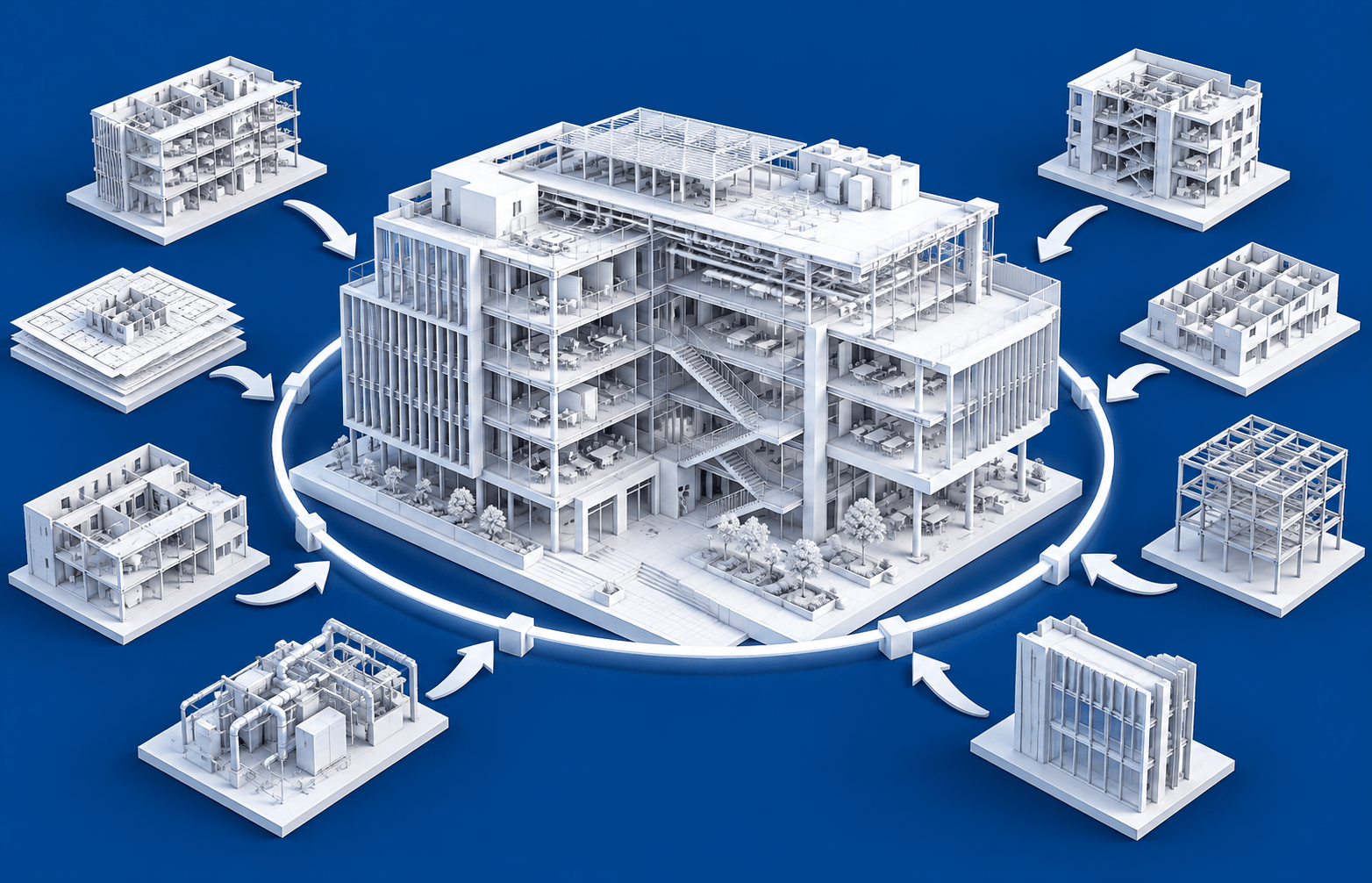
Architecture teams often work with structural and MEP models that continue changing at different speeds.
Live cloud collaboration can improve access to current information. Autodesk’s current design-collaboration platform, for example, supports cloud worksharing, controlled data exchange, coordination, and issue tracking across project teams.
The technology does not remove the need for agreed release points.
The production team must know:
- Which consultant model is approved for coordination
- Which updates are work in progress
- What changed between releases
- Which issues affect architectural documentation
- When resolved coordination can be incorporated into drawings
Without this distinction, architectural BIM services may continually react to provisional information. The latest model is not always the correct model for a formal documentation milestone.
Different Project Types Need Different Production Strategies
The same delivery model should not be applied across every market.
Residential programs may benefit from controlled unit types, repeatable details, and systematic change propagation.
Education projects may require strong room-data coordination and consistency across repeated teaching spaces.
Commercial buildings often need flexibility for tenant changes while core and shell documentation continues.
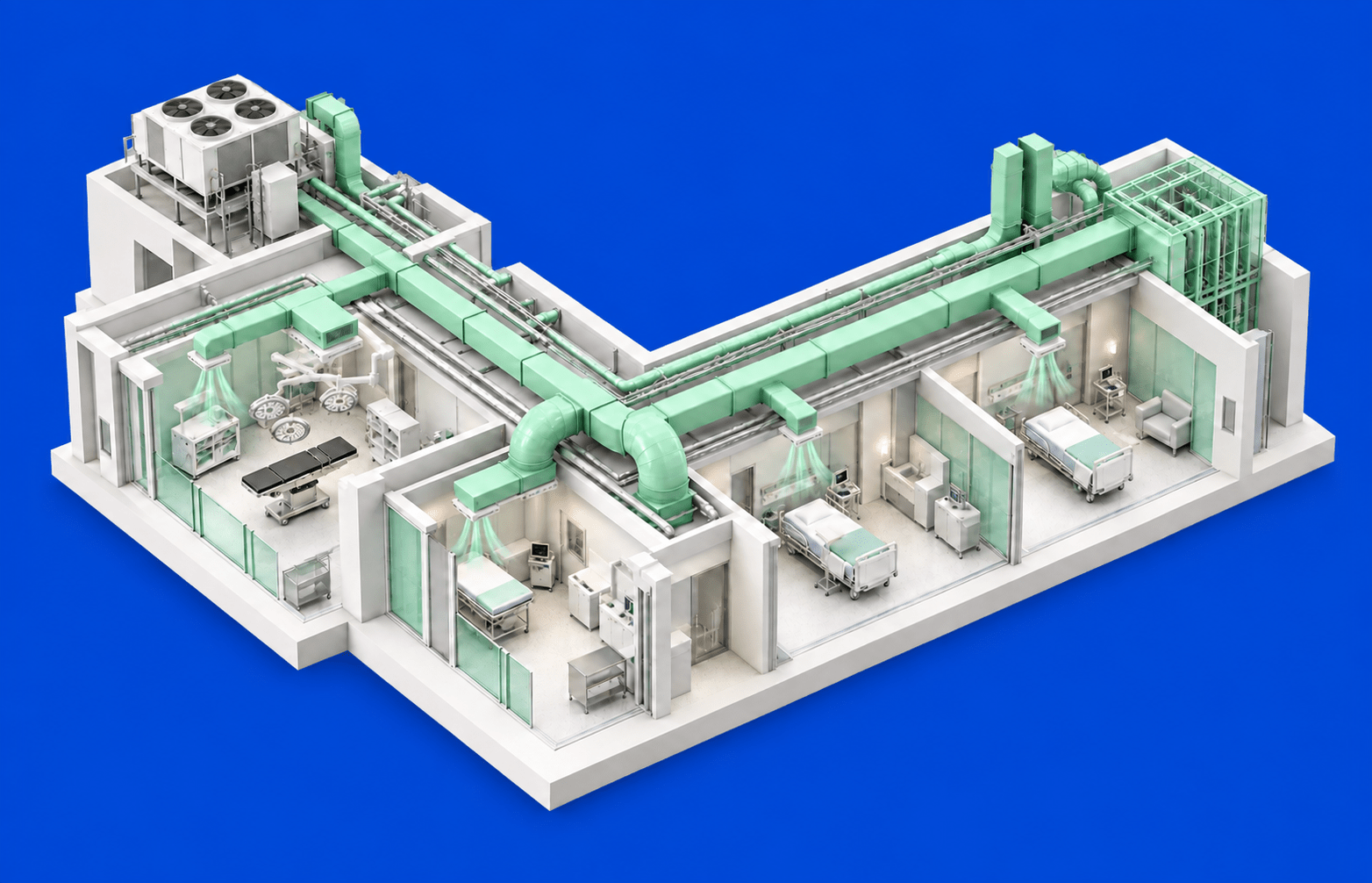
Hospitals bring dense coordination, specialized room requirements, and extensive schedules.
Airports and industrial facilities may involve large models, multiple packages, and interfaces with specialized systems.
The production plan should reflect where repetition can be standardized and where project-specific design attention remains essential.
Building a Scalable Delivery Extension
TAAL Tech provides BIM production services, architectural BIM services, detailed documentation, and permit drawing services for architecture firms working across complex building programs.
We establish project-specific teams around the client’s standards, model environment, review process, and delivery milestones. This allows production capacity to expand without transferring design authority away from the architecture firm.
The strongest delivery model is visible in the firm’s workload: more approved output, fewer repeated comments, and more internal time available for design and client decisions.