
29
June, 2026
Finite Element Analysis: How FEA Reduces Physical Testing and Design Iterations
Physical testing will always remain important in engineering. It proves how a product, structure or system behaves under real conditions. But relying on physical tests for every design question can slow programs down, increase prototype costs and delay decisions.
This is where finite element analysis, or FEA, becomes valuable. FEA helps engineering teams evaluate strength, stiffness, vibration, fatigue, thermal behaviour and load response before committing to repeated physical builds.
The shift is already visible. The computer-aided engineering market is projected to grow from USD 12.28 billion in 2025 to USD 19.96 billion by 2030. The wider simulation software market is also expected to grow from USD 19.95 billion in 2024 to USD 36.22 billion by 2030. For engineering teams, this growth reflects a practical need: faster validation with fewer late-stage surprises.
What Finite Element Analysis Does
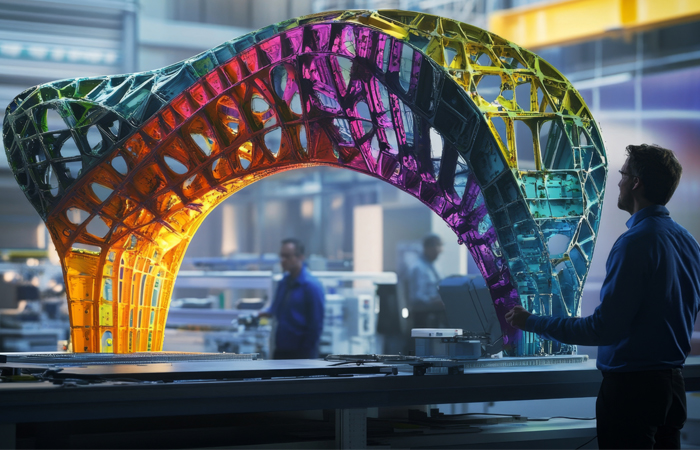
Finite element analysis breaks a complex design into smaller elements and uses mathematical models to predict how the design may behave under defined conditions. Instead of waiting for a prototype to fail, engineers can study stress concentration, deformation, vibration modes, heat transfer and fatigue-sensitive zones earlier in development.
This is especially useful when products have complex geometry, multiple load paths, material constraints or strict performance requirements. FEA can help engineers compare design options, check weak points, reduce unnecessary mass, assess brackets and joints, and understand whether a concept is moving in the right direction.
The real value is not only in producing colourful stress plots. It is in using simulation to make better design decisions before manufacturing, testing or certification work becomes expensive.
Why Physical Testing Alone Is Not Enough
Physical testing is essential, but it is often expensive, time-consuming and limited by the number of prototypes a team can build. A single test may show that a part failed, but it may not explain every stress path, local deformation pattern or load transfer behaviour behind the failure.
FEA gives engineers a deeper view of what is happening inside the design. A physical test can confirm performance, while FEA can help explain why the design behaves that way. When used together, testing and simulation create a stronger validation process.
For product teams working under tight timelines, this matters. A design that reaches physical testing with avoidable errors can trigger another loop of redesign, prototype manufacturing, test setup, supplier coordination and engineering review. FEA helps reduce these loops by identifying risks earlier.
Where FEA Reduces Design Iterations
FEA is especially useful during early and mid-stage design, when engineering teams still have room to make changes. At this stage, simulation can help answer practical questions such as:
- Will the component withstand expected static loads?
- Where are the high-stress zones?
- Is the structure too heavy for the required performance?
- Will the bracket, frame or housing deform beyond acceptable limits?
- Are welds, fasteners, joints or interfaces carrying load as expected?
- Does the design need more stiffness, better load distribution or material reduction?
- Will vibration, thermal loads or fatigue affect long-term performance?
By answering these questions early, teams can reduce avoidable design revisions. This does not remove the need for engineering judgement. It strengthens it.
FEA Helps Balance Strength, Weight and Cost
One of the strongest use cases for finite element analysis is design optimization. Many designs become heavier than required because teams build in extra material to stay safe. That may reduce risk, but it can also increase material cost, manufacturing effort and operating impact.
FEA helps identify where material is needed and where it may be excessive. This is critical in industries such as aerospace, automotive, heavy equipment, industrial machinery and plant engineering, where weight, durability and performance are closely connected.
For example, a frame may need reinforcement near load introduction points, while other areas may be overdesigned. A bracket may pass static load requirements but show fatigue risk near a sharp corner. A sheet metal enclosure may need better stiffness rather than more thickness. FEA helps engineers see these differences before they become manufacturing decisions.
Accuracy Depends on the Right Inputs
FEA is powerful, but it is not automatic proof. A simulation is only as reliable as the assumptions behind it. Material properties, boundary conditions, constraints, mesh quality, contact definitions, load cases and interpretation all affect the result.
NAFEMS, a global engineering simulation body, has repeatedly emphasized that FEA requires practical understanding because there are many possible traps in meshing, loading, constraints and pre/post-processing. This is why experienced analysis support matters.
A weak model can create false confidence. A good model helps engineers make decisions with clarity. The difference lies in knowing how to simplify the problem without losing the physics that matter.
FEA and Testing Should Work Together
The strongest validation approach usually combines simulation with targeted testing. FEA can reduce the number of physical tests required, but it should not be treated as a complete replacement where safety, compliance or certification is involved.
A practical workflow may look like this:
- Use FEA to compare early design options.
- Identify weak zones and improve the design.
- Run load, fatigue, modal or thermal simulations based on real operating conditions.
- Build fewer, better prototypes.
- Use physical test data to correlate and improve the model.
- Apply the validated model to future design changes.
This helps engineering teams reduce guesswork. It also creates a knowledge base that can support future programs, variants and sustaining engineering work.
Common Applications of Finite Element Analysis
FEA can support a wide range of engineering requirements, including:
- Static structural analysis
- Linear and nonlinear analysis
- Modal and vibration analysis
- Thermal analysis
- Fatigue and durability assessment
- Buckling analysis
- Contact analysis
- Weld, fastener and joint evaluation
- Load path assessment
- Bracket, frame and support structure analysis
- Design optimization and lightweighting
- Test correlation and failure investigation
For global engineering teams, these applications are useful across product development, plant systems, industrial machinery, aerospace structures, vehicle systems, equipment platforms and aftermarket updates.
How TAAL Tech Supports Finite Element Analysis Programs
TAAL Tech supports engineering teams across design, validation, documentation and lifecycle engineering. Our finite element analysis support helps customers evaluate design behaviour, reduce avoidable iterations and improve confidence before physical testing.
Our teams support structural assessment, load path evaluation, bracket and attachment analysis, metallic and composite part studies, design optimization, test-correlation support, product development and sustaining engineering. This is especially useful for programs where strength, weight, durability, manufacturability and schedule all need to be managed together.
Finite element analysis works best when it is connected to real engineering decisions. That means understanding the design intent, loading conditions, manufacturing constraints, test requirements and product lifecycle.
The goal is simple.
Test what matters. Simulate what can be understood earlier. Reduce the iterations that should never reach the prototype stage.