
13
February, 2026
Electrifying the Aircraft Powerplant: From Fuel-Heavy to Electron-Smart
A lot of the aviation decarbonisation conversation is about fuels: SAF, hydrogen, blends and mandates. Quietly in the background, another shift is gathering pace – turning the powerplant into a smarter electrical generator, and letting electrons do more of the work.
Modern electric motors routinely operate with very high efficiency. By contrast, every shaft, gearbox, bleed port and hydraulic line hanging off a turbofan is a source of frictional and thermal loss. If you can replace those mechanical paths with clean electrical power – and then go a step further into hybrid-electric propulsion – you start attacking fuel burn and emissions at the physics level, not just in policy decks.
This is where the worlds of energy and aerospace meet: cleaner grids on the ground, and more-electric, hybrid-electric architectures in the air.
From “accessories” to “electrical loads”
The first real step isn’t sci-fi hybrid airliners; it’s the more-electric aircraft.
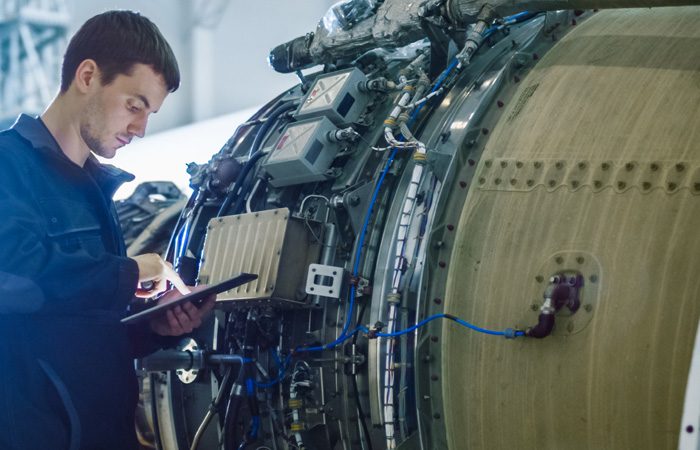
On a conventional engine, a lot of energy never becomes thrust. It disappears into:
-
- Shaft-driven fuel and hydraulic pumps
- Bleed air for environmental control systems, pressurisation and wing anti-ice
- Mechanical accessory gearboxes that drag on the core
In a more-electric architecture, these become electrical loads instead of mechanical parasites. High-efficiency generators feed:
-
- Electric hydraulic and fuel pumps
- Electric compressors for ECS instead of heavy bleed systems
- Electro-hydrostatic or electro-mechanical actuators for flight controls
You’re still burning Jet A, but the engine is now optimised to be a thrust maker and power generator, not a Christmas tree of accessories. Various MEA studies on large aircraft talk about meaningful single-digit reductions in fuel burn and CO₂ just by cleaning up these “hidden” losses – with the added upside of simpler plumbing and better reliability.
TAAL Tech typically joins at this stage with electrical load analysis, bus sizing and “what-if” studies that answer a blunt question for OEMs: if we electrify these systems, how much fuel and maintenance pain do we actually remove over a 20-year fleet life?
Hybrid-electric: when turbines and motors share the work
Pure-battery airliners are still held back by energy density, but hybrid-electric is already looking credible for regional and short-haul aircraft.
There are a few dominant patterns:
-
- Parallel hybrid, where a turbine and an electric motor both contribute to the same fan or propeller
- Series hybrid, where the turbine drives a generator only and all thrust comes from electric motors
- Distributed hybrid, where multiple smaller electric fans are spread along the wing or fuselage and fed by a central turbogenerator plus batteries
What matters is not the naming, but the curves. Turbines are most efficient in relatively narrow operating windows; electric machines are brutally efficient across a wide range. Hybrid-electric concepts exploit that by:
-
- Letting electric systems “boost” the powerplant in the worst parts of the mission (take-off and climb)
- Letting the turbine sit closer to its sweet spot in cruise
- Using batteries more as a high-power buffer than a full energy source
Recent megawatt-class regional studies report around 9–10% fuel burn reduction versus a conventional baseline for carefully controlled hybrid missions, with further improvements possible as components mature. For an operator flying thousands of hours a year, that’s not a rounding error – it’s a business case.
In one hybrid-electric regional concept study, TAAL Tech built a digital twin of the powertrain and a representative mission profile. By sweeping power-split strategies across climb, cruise and descent, the team helped narrow down to architectures that delivered high single-digit fuel savings without relying on “miracle battery” assumptions.
Fully electric and eVTOL: shorter hops, bigger impact
Where fully electric propulsion is already starting to make sense is at the smaller, shorter-range end of the market:
-
- Trainer and commuter aircraft
- Short-hop business aviation
- eVTOL and urban air mobility vehicles
Here, the combination of high motor efficiency, short sectors and improving energy storage creates interesting numbers. On some profiles, when aircraft are charged from low-carbon grids, operational CO₂ reductions north of 80–90% are being discussed in the literature. Even when the grid isn’t perfectly green, life-cycle analyses tend to show big drops in local pollutants and noise.
The soundscape is just as important as the tailpipe. Distributed electric propulsion, with many smaller propulsors turning more slowly, can bring noise footprints down dramatically versus a traditional rotorcraft or regional turboprop – a prerequisite for flying closer to where people live and work.
TAAL Tech’s work with eVTOL and light-electric programs often starts with integrated powertrain models: batteries, inverters, motors, props or rotors, plus the structural integration of packs into wings and booms. The key question for those customers is simple: for the routes you care about, what combination of range, payload and charging profile actually closes?
The hard bits: weight, heat and high voltage
Electrification simplifies some things and complicates others.
-
- Energy storage: jet fuel still wins hands-down on energy per kilogram. Every extra minute of electric range eats into payload or forces compromises on reserve policy. Battery packs must be structurally integrated, crashworthy and thermally managed. Hybrid architectures ease this by using batteries as power buffers, but they don’t remove the weight trade-off.
- Heat and high voltage: megawatt-class electric systems mean high-voltage DC buses, large inverters and hot motors. Designing cooling loops, heat exchangers and interfaces with the ECS becomes core aircraft engineering, not an afterthought. So does HV safety: insulation faults, arcing and fault-tolerant architectures must be treated with classic aviation conservatism, not consumer-EV optimism.
- Infrastructure: a beautiful electric aircraft can still fail commercially if the airport can’t feed it. High-turnaround fleets need serious grid connections, smart charging strategies and, in some cases, on-site storage or renewables. Otherwise, energy costs and peak-load penalties eat into the environmental wins.
In a recent shuttle-fleet concept, TAAL Tech modelled not just the aircraft, but the airport micro-grid: how many simultaneous fast charges the infrastructure could support, what peak loads looked like, and what mix of solar, storage and grid capacity actually made financial sense.
Electrons as a design brief, not an afterthought
The common thread across more-electric, hybrid-electric and fully electric powerplants is that electrification can’t be bolted on at the end. It has to become a design brief from day one:
-
- Minimise mechanical and frictional losses around the engine
- Use electrical generation where it makes thermodynamic sense
- Place motors as close as possible to where you want thrust or torque
- Treat the aircraft and the energy system on the ground as one coupled problem
That’s where TAAL Tech is positioning its aerospace and energy teams together – not as a “green lab”, but as a design, simulation and certification partner that understands both gas turbines and high-voltage networks.
For aerospace players, the question has shifted from “Will electrification happen?” to “Where do we get the first 10–15% advantage in fuel, emissions and noise without betting the company?”
Answering that is less about slogans, and more about engineering the powerplant as an electron-smart system from the start.