
13
August, 2026
Aircraft Cabin Retrofit Engineering: What Changes Beyond the Visible Interior?
Airlines are having to extract more value from aircraft already in service. In June 2026, IATA reported that the global aircraft order backlog had crossed 18,000 aircraft, average fleet age had reached a record 15.2 years, and supply-chain failures had cost airlines at least $11 billion in 2025.
Against that backdrop, aircraft cabin retrofit engineering is taking on greater strategic importance. A refreshed cabin may improve the passenger proposition or harmonise a fleet, but what looks like an interiors programme can quickly become a multi-disciplinary aircraft modification programme.
The difficult part is rarely deciding what the new cabin should look like.
It is understanding everything that has to change behind it.
The Retrofit Wave Is Already Building
The timing is significant.
Airbus states that an A350 typically reaches its first cabin retrofit at around eight years of service. By 2028, more than 390 A350 aircraft are expected to have reached that age.
This is not theoretical demand. Finnair has already completed a major aircraft cabin retrofit across its entire widebody fleet of eight A330s and 17 A350s, introducing new Business Class, Premium Economy and refreshed Economy cabins. Delta's A350 programme provides another useful indication of the engineering scope involved. Airbus describes it as a nose-to-tail modification covering seats, monuments such as galleys and lavatories, overhead bins, connectivity, avionics and systems configuration.
For engineering leaders, there is a clear implication.
Cabin retrofit capacity is not only about having enough cabin designers. It is about having enough engineering capability around the cabin to resolve what every design decision touches.
A Cabin Change Can Travel Further Than Expected
Take a galley replacement.
At layout level, the requirement may appear straightforward: remove the existing galley and install a new monument within the available cabin envelope.
Yet the engineering questions begin almost immediately.
Does the new unit use the same attachment locations? Has its mass changed? Can existing water and drainage connections be retained? Does electrical demand change? Are ventilation provisions still suitable? Is there enough access behind the unit for installation and maintenance?
The same pattern appears across an aircraft cabin modification:
| Visible change | What engineering teams may need to revisit |
| New or modified galley | Attachments, electrical power, water, drainage, ventilation, equipment interfaces |
| Relocated lavatory | Structure, water and waste routing, ventilation, electrical interfaces |
| New bulkhead or partition | Floor and overhead attachments, surrounding panels, clearances |
| Revised seating layout | Seat tracks, electrical provisions, surrounding monuments and access |
| Larger stowage | Ceiling interfaces, lining, lighting and installation definition |
| New cabin equipment | Mounting, electrical supply, cabling, cooling, access and maintainability |
This is where aircraft cabin engineering differs from simply arranging interior components.
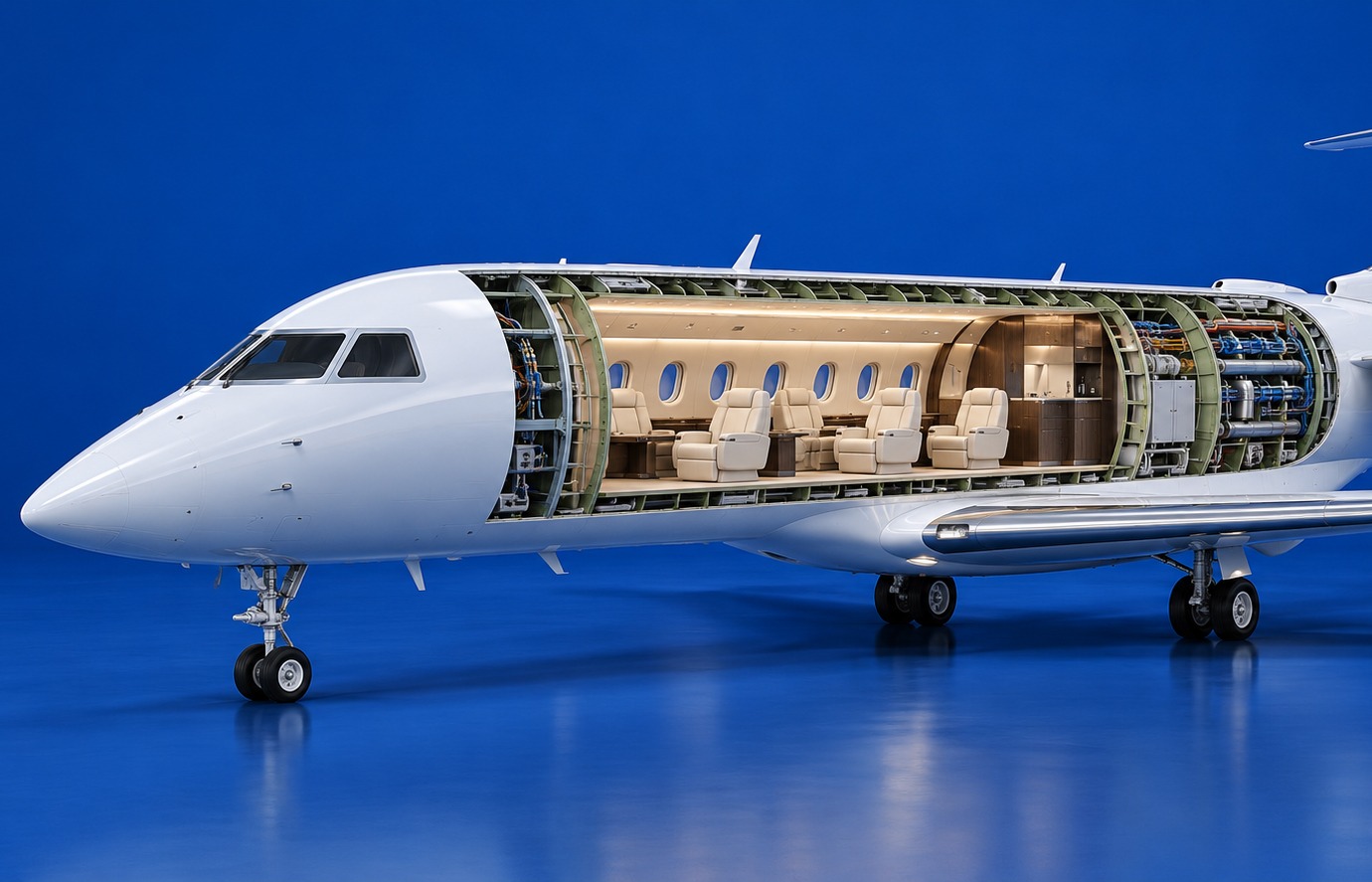
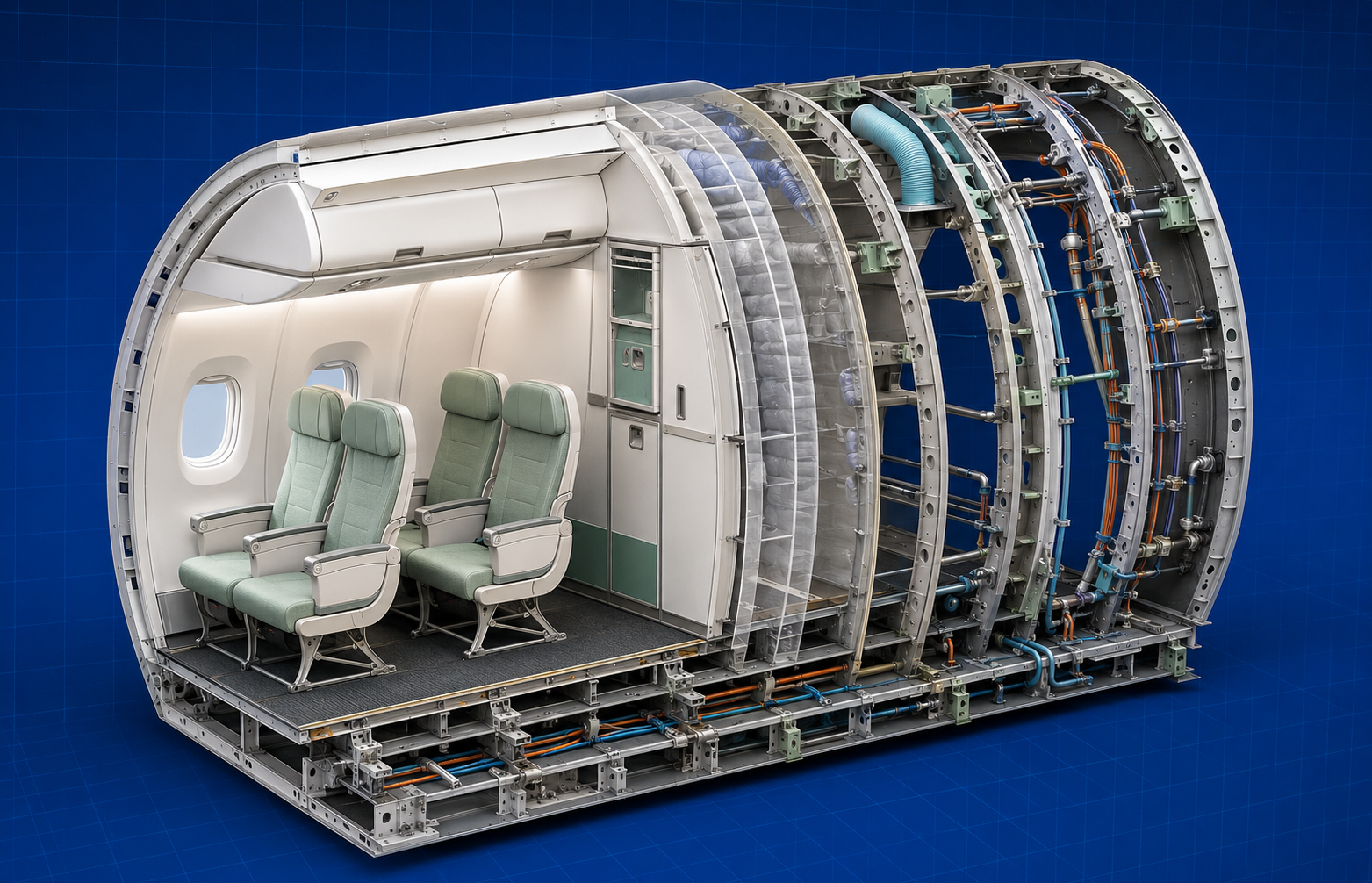
Every new monument enters an aircraft environment that is already densely occupied by structure and systems.
A design can therefore work perfectly on a cabin layout while creating a problem just behind the visible surface.
The Interface Is Often Where Retrofit Risk Accumulates
In a new aircraft programme, interfaces can be developed alongside the product.
An aircraft interior retrofit has a different starting point. The aircraft already exists. Its structure is fixed. Much of its routing is fixed. Access is constrained. Previous modifications may also have changed what is actually installed.
The job is to make something new coexist with all of that.
Consider aircraft monument design for a replacement lavatory. Moving the unit even slightly could influence an attachment zone, water and waste routing, adjacent ducting, electrical installations or access to equipment behind the monument.
None of those issues is necessarily difficult on its own.
The problem is when they are discovered sequentially.
Cabin releases a design. Structures identifies an issue. The monument changes. Mechanical engineering then finds that the revised geometry affects a route. Installation reviews the next iteration and finds that a connector is no longer accessible.
One cabin decision has now produced several design cycles.
The more useful question for programme leaders is therefore not:
“Is the cabin design complete?”
It is:
“Are the interfaces mature enough for us to release it?”
That shift in thinking can materially change how an aircraft interior modification programme is managed.
Configuration Accuracy Can Decide Whether the Design Works on the Aircraft
There is another retrofit risk that receives less attention: the baseline.
The aircraft being modified may have been operating for ten, fifteen or twenty years. During that period it may have accumulated repairs, service bulletins, equipment replacements, cabin changes and airline-specific modifications.
Engineering teams therefore need to know which aircraft definition they are designing against.
For aircraft cabin refurbishment programmes involving several tails, this can become particularly important. Aircraft that appear identical at fleet level may not be identical in the areas affected by the modification.
A reliable engineering baseline may require teams to reconcile:
- Applicable aircraft configuration
- Existing installation drawings
- 2D and 3D design data
- Structural definition
- Mechanical and electrical interfaces
- Previous modifications
- Equipment and supplier information
- Aircraft-specific differences
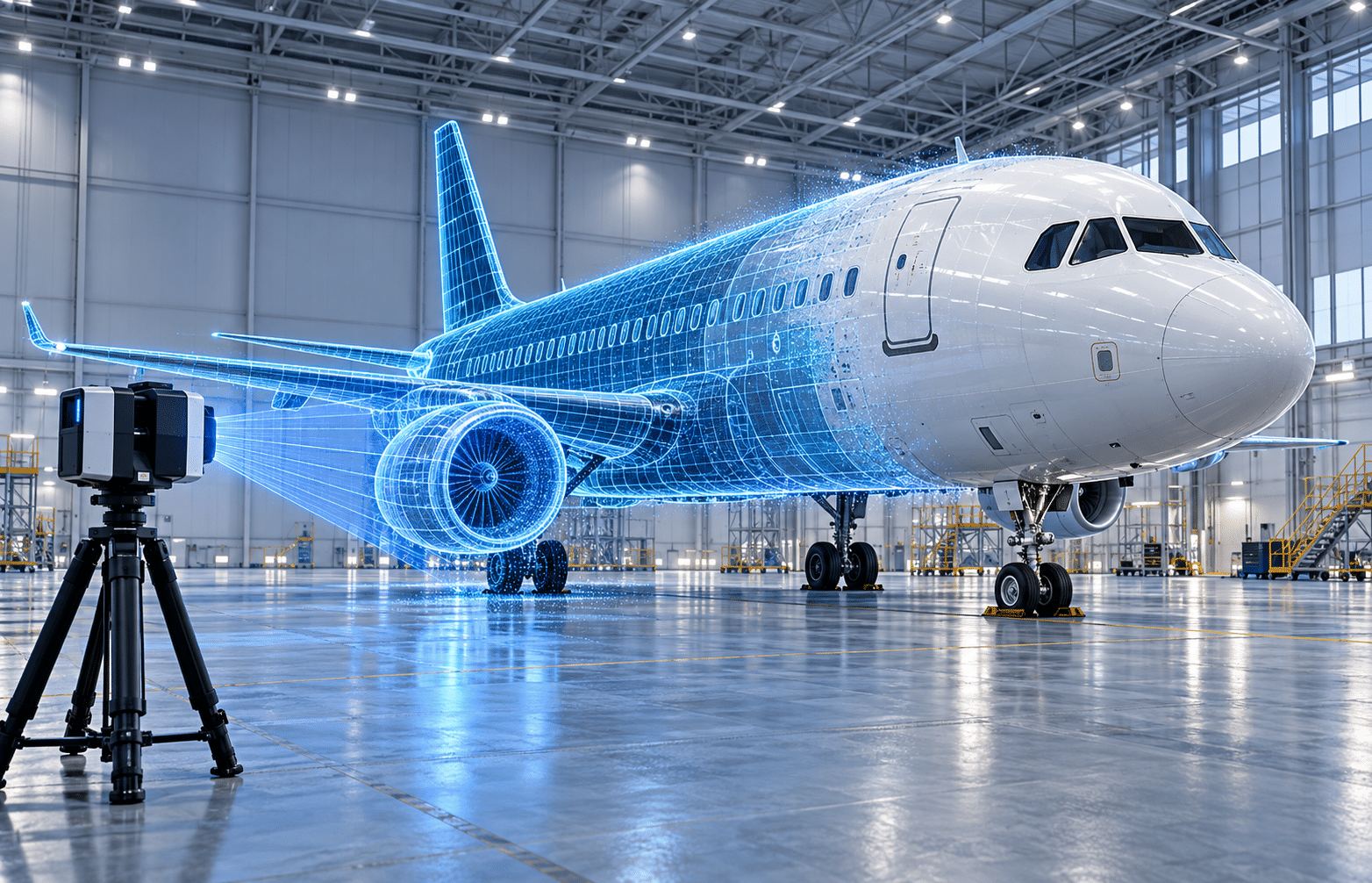
Where usable digital definition is incomplete, reverse engineering or reconstruction of legacy geometry may also be necessary.
This is not documentation housekeeping.
For aircraft modification engineering, configuration fidelity determines whether the proposed installation is being checked against the aircraft that will actually enter the modification line.
Downtime Should Influence Engineering Decisions Earlier
The engineering programme eventually meets a very commercial metric: aircraft availability.
An aircraft undergoing modification is not generating normal flying revenue. That makes the ease with which a design can be embodied relevant much earlier than the installation stage.
Airbus' A320 Family L-bin retrofit provides a useful example. The solution was designed to reuse several elements from the existing installation, including the sidewall, ceiling and lighting, and Airbus says the retrofit can be completed in approximately three to five days.
The interesting lesson is broader than overhead bins.
Reuse of existing interfaces can be an engineering strategy for reducing embodiment effort.
For a galley, lavatory, partition or other cabin installation, teams can ask early:
- Which existing attachments can remain?
- Which surrounding parts genuinely need modification?
- Can current system routes be retained?
- Can installation be completed without extensive removal of neighbouring equipment?
- Can the design reduce work inside the aircraft?
- Can modification kits and installation documentation be made easier to execute?
This is where good aircraft interior engineering connects design intent with the realities of the modification line.
The most elegant new design is not automatically the most effective retrofit design.
Certification Is Part of the Change, Not the Final Gate
Cabin modification also has to be viewed through the certification impact of the change.
The FAA's definition of a Supplemental Type Certificate makes the point clearly: an STC approves not only the modification itself, but also how that modification affects the original design.
That is exactly why a seemingly local cabin change can widen in scope.
Depending on the modification, engineering teams may need to consider areas including structural substantiation, electrical changes, flammability, emergency provisions, smoke detection and other affected aircraft systems.
If certification implications only become clear after detailed design is mature, apparently finished work can return for another engineering cycle.
For aircraft cabin retrofit engineering, certification therefore needs to influence architecture and interface decisions while there is still room to change them efficiently.
TAAL Tech's Approach to Aircraft Cabin Retrofit Engineering
The engineering challenge in a retrofit is rarely confined to one discipline. That is why additional capacity delivers more value when it can operate across the interfaces surrounding the cabin.
TAAL Tech supports aircraft cabin retrofit engineering across cabin and monument development, structural design, mechanical systems integration, installation definition and detailed engineering documentation.
Our work can support galleys, lavatories, bulkheads and other interior installations alongside the structural and mechanical dependencies required to integrate them into the aircraft. This allows cabin retrofit services to extend beyond isolated component modelling into the wider engineering work needed to progress a modification towards an installation-ready definition.
For customers handling multiple programmes, ageing platforms or compressed modification schedules, the objective is practical: resolve more of the aircraft around the cabin before those issues reach downstream teams.