19
August, 2026
How Architectural Production Services Help Architecture Firms Scale Without Expanding In-House Teams
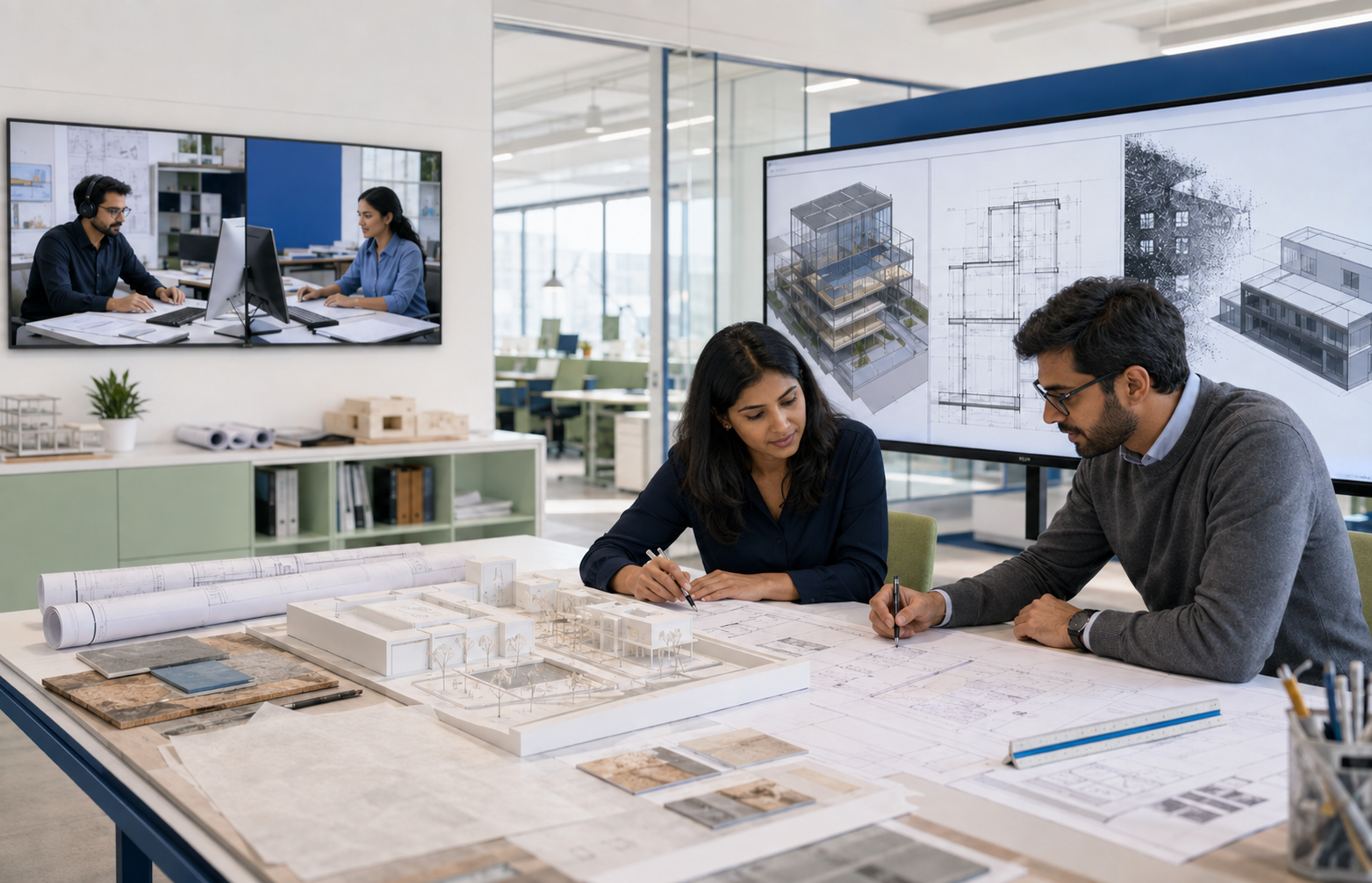
Three projects can move into documentation at the same time. A permit package gets pulled forward. A retrofit arrives with point-cloud data that still needs to become a usable model.
For architecture firms, these peaks can quickly consume production capacity.
AIA reported in May 2026 that nearly four in ten surveyed architecture firms did not consider themselves appropriately staffed. The challenge is especially relevant when firms need additional delivery capacity for specific projects or project stages rather than permanent expansion.
This is where architectural production services can become an extension of the project team.
Scale the Production Work Around the Project
The requirement can change significantly from one stage to another.
A project may initially need Revit modeling services and architectural planning support. As design develops, the workload can move into detailed drawings, interior and fit-out detailing, multidisciplinary coordination and permit documentation.
An external production team allows firms to add capacity around these stages while maintaining their own design standards and project ownership.
That support can include:
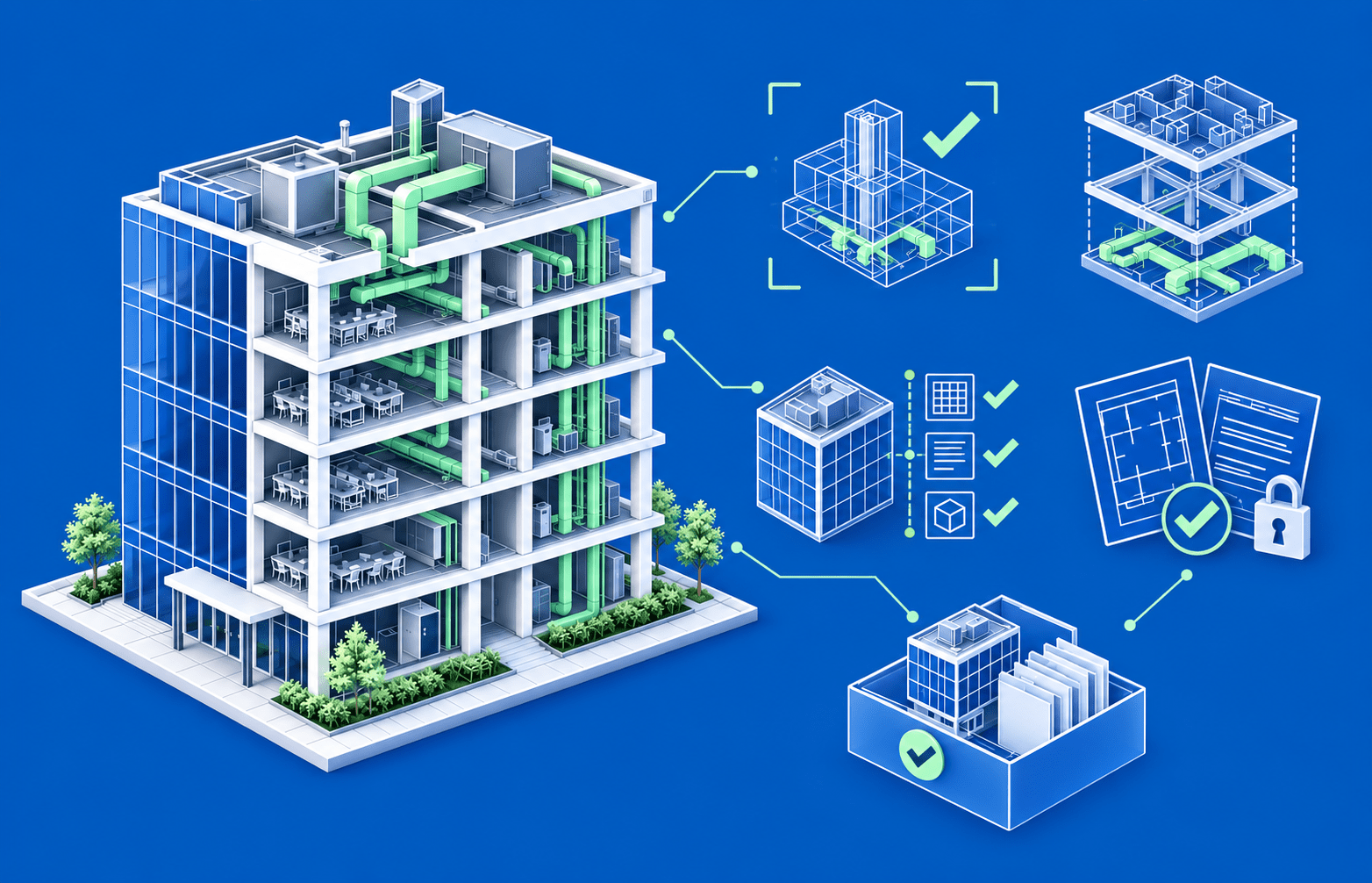
- BIM modeling and model development
- Detailed architectural drawings
- Permit drawing sets
- Interior and fit-out detailing
- Revit families and project templates
- Coordination with other disciplines
- Clash coordination
- CAD to BIM and PDF to BIM
- Point cloud to BIM
- Production workflow automation
The value is in having these activities connected rather than distributed across unrelated drafting resources.
Move from Design Development to Documentation Faster
As projects move forward, design information has to become increasingly detailed, coordinated and ready for downstream use.
This is where architectural documentation services can absorb a significant share of the production workload.
Models need to remain aligned with plans, sections, elevations, schedules and details. Changes need to move consistently through the documentation set. Architectural information also needs to coordinate with structural, MEP and other project disciplines.
A production team working within the firm's Revit standards can support these activities without requiring senior design resources to spend more of their time on model and drawing production.
For firms handling several projects simultaneously, that can create more room for internal teams to focus on design decisions, reviews and client coordination.
Standardize Before You Scale
Additional production capacity works better when everyone is working from the same system.
Parametric Revit families, project templates, naming conventions and documentation standards help establish that consistency.
For firms delivering repeated project types, large programmes or work for recurring clients, these assets can also reduce setup effort across future projects.
BIM modeling services therefore extend beyond developing individual models. They can support a more repeatable production environment in which additional team members can be brought into projects without recreating standards each time.
Automation can push this further by reducing repetitive Revit and documentation tasks that otherwise consume production hours across multiple projects.
Existing Buildings Need Production Support Too
Renovation and retrofit projects often begin with information that is difficult to use directly.
Laser scans, old CAD files, PDFs and incomplete record drawings may first need to be converted into an accurate digital base for the new design.
Point cloud to BIM services, CAD to BIM and PDF to BIM can turn this information into coordinated architectural models and drawings that teams can work with.
For architecture firms, this can shorten the route from existing-condition information to actual design development, especially on projects where creating the base model internally would consume considerable project hours.
Extending Architecture Teams Beyond Drafting
At TAAL Tech, our architectural production services support architecture firms across BIM modeling, detailed design and drawings, permit sets, interior and fit-out detailing, multidisciplinary coordination, Revit family and template development, reverse engineering and production automation.
The objective is straightforward: provide production capacity where the project needs it while working within the architecture firm's design intent, BIM standards and delivery processes.
That could mean supporting a single documentation package, taking on Revit modeling services for a project, converting point-cloud information into BIM, or becoming a longer-term production extension across multiple projects.
For architecture firms looking to grow project delivery without building every production requirement into permanent headcount, that flexibility can make scaling considerably easier.
Looking to expand architectural production capacity across BIM, documentation, detailing or coordination? Connect with TAAL Tech to discuss your upcoming project requirements.