
11
August, 2026
Aircraft Interior Monument Design: From 3D Concept to Installation-Ready Engineering
Aircraft operators are being pushed to extract more value from existing fleets. In 2025, the global aircraft backlog exceeded 17,000 aircraft, with IATA estimating an implied wait time of around 14 years. Supply-chain constraints also contributed an estimated $3.1 billion in additional airline maintenance costs as older aircraft remained in service longer.
That makes cabin upgrades and aircraft modification programmes increasingly relevant.
For engineering leaders, however, the challenge is rarely the ability to design a new galley, lavatory, bulkhead or other aircraft interior monument. The bigger issue is controlling what that monument changes across the aircraft.
A monument can affect structures, system routing, attachments, installation definition and downstream engineering data. The real measure of aircraft interior monument design is therefore how effectively those dependencies are resolved before they begin creating programme churn.
Cabin Retrofit Is Becoming a Bigger Engineering Conversation
The retrofit opportunity is becoming visible even among relatively young aircraft programmes.
Airbus says an initial cabin retrofit typically occurs after around eight years in service. More than 500 A350s had already been delivered when Airbus outlined its retrofit outlook, and it expected more than 390 A350 aircraft to have reached the eight-year mark by 2028.
That matters beyond the interiors market.
Every aircraft cabin retrofit creates an engineering convergence point between what the operator wants to change and what the existing aircraft will allow.
For monuments, three areas deserve particular attention.
1. Interface Maturity Matters More Than Model Maturity
A monument design can look mature in CAD while important engineering questions remain open.
Take a lavatory relocation.
The new geometry may already be defined, but the programme may still need to resolve:
- potable and grey water integration;
- attachment provisions;
- floor or overhead support changes;
- air-conditioning routing;
- smoke-detection routing;
- installation access; and
- interactions with neighbouring monuments.
That distinction is important for programme leadership.
Percentage of 3D completion can give a false sense of progress if the interfaces around the monument are still moving.
A more useful set of programme questions is:
How many interfaces remain unresolved when detailing begins?
How often are structural and systems teams responding to monument changes?
How many released drawings require revision because the underlying configuration has moved?
These indicators reveal whether the design is actually converging.
For complex aircraft cabin modification programmes, interface stability can be a better measure of readiness than CAD completion alone.
2. Use the DMU Before Design Freedom Disappears
Digital Mock-Up is already established across aerospace engineering. The bigger opportunity lies in when programme teams use it to make decisions.
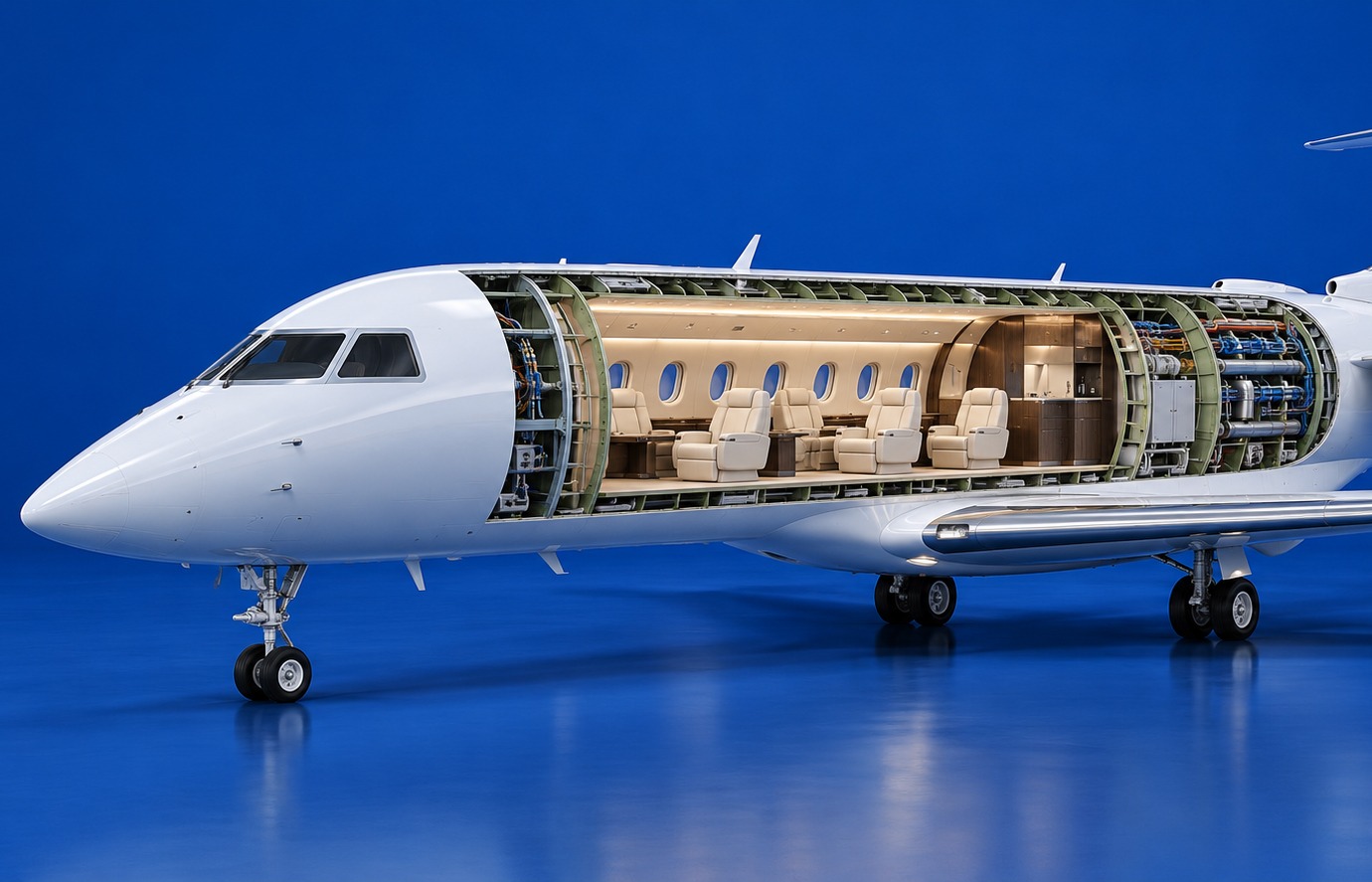
Airbus describes its A350 Digital Mock-Up as a 3D aircraft definition used through design, upgrades and modifications. For retrofit engineering, the DMU enables teams to examine areas around the cabin, including structure and routing spaces, before defining modification solutions.
For aircraft monument design, that makes the DMU particularly valuable before layouts become expensive to change.
A useful DMU review should challenge questions such as:
- Is the proposed monument location compatible with the surrounding structure?
- What exists below the floor or above the ceiling?
- Can required systems reach the monument without creating another conflict?
- Are installation and removal envelopes realistic?
- Does the proposed configuration restrict access elsewhere?
- What happens to neighbouring installations if the monument moves again?
This changes DMU from a visual review environment into an engineering decision tool.
There is an important programme implication here.
The later a conflict is found, the more engineering artefacts it can affect.
A change during concept design may primarily alter geometry. The same change after detailing can affect component drawings, top assemblies, installation drawings, routing definition and eBOMs.
The best time to expose monument integration problems is therefore while the programme still has options.
3. Watch the Change Radius of Every Monument Decision
One of the most useful concepts for engineering leadership is the change radius of a design decision.
Consider a revised galley envelope.
At first, the change may appear local to the monument.
But if the envelope affects an attachment location, the structural definition may change. If available routing space is reduced, mechanical systems may need revision. If either change affects installation, drawings and assemblies must follow.
One geometry decision has now produced work across several disciplines.
This is where seemingly modest aircraft interior modification programmes can accumulate engineering hours without a dramatic change in visible scope.
The goal is not to prevent design iteration. Aerospace programmes will always iterate.
The goal is to understand which decisions have the largest downstream radius and resolve them early.
For senior programme teams, that means paying particular attention to monument location, envelope, attachment philosophy, major inserts and system interfaces before detailed definition accelerates.
Installation Definition Is Where Design Quality Becomes Visible
There is also a practical way to test whether the engineering has converged: look at what happens when the design moves downstream.
Stable aircraft interior engineering should support progressively stable:
- 2D component detailing;
- structural and mechanical drawings;
- top assembly drawings;
- installation drawings; and
- engineering Bills of Materials.
Repeated revisions at this stage often indicate that unresolved design decisions have simply travelled downstream.
This matters because installation definition is where multiple engineering assumptions finally have to agree.
The monument geometry, structural interfaces, mechanical integration and configuration data all need to describe the same installation.
For engineering leaders, high drawing churn late in the programme should therefore be treated as more than a documentation issue. It can be an indication of upstream interface instability.
Legacy Aircraft Add a Data Problem to the Design Problem
Older platforms introduce another complication.
The available aircraft definition may include legacy 2D drawings, incomplete digital geometry or design information created across multiple generations of tools.
For an aircraft interior modification, unreliable baseline data increases the risk of designing against incorrect assumptions.
Reengineering and reverse engineering can help reconstruct usable digital definition before new monument development progresses too far.
The value is straightforward: every downstream decision becomes stronger when engineering teams have greater confidence in the aircraft they are modifying.
With ageing fleets remaining in service longer due in part to delivery and supply-chain constraints, this capability is likely to remain relevant to retrofit and sustenance programmes. IATA estimates that aviation supply-chain failures cost airlines at least $11 billion in 2025.
Five Questions Engineering Leaders Should Ask
Before an aircraft monument programme moves deeply into detailed engineering, five questions can expose whether the design is genuinely ready:
- Are monument-to-structure interfaces stable?
- Have system routing implications been resolved in the aircraft-level DMU?
- Which design decisions could still trigger changes across multiple disciplines?
- Is the existing aircraft definition reliable enough for the modification being planned?
- Can installation drawings, top assemblies and eBOMs now progress without major configuration changes?
A “no” to several of these questions does not necessarily mean the programme is behind.
It means the programme still carries integration uncertainty, and that uncertainty should be visible in planning.
How TAAL Tech Supports Aircraft Interior Monument Design
Our aircraft interior design services support the engineering path from early monument definition to installation-ready design.
For aircraft interiors, our capabilities include:
- design and development of aircraft interior monuments;
- 3D concept design;
- development and management of full-scale Digital Mock-Ups;
- 2D detailing of monuments and floor structures;
- installation and top assembly drawings;
- eBOM creation;
- interior monument insert product development support; and
- reengineering and reverse engineering.
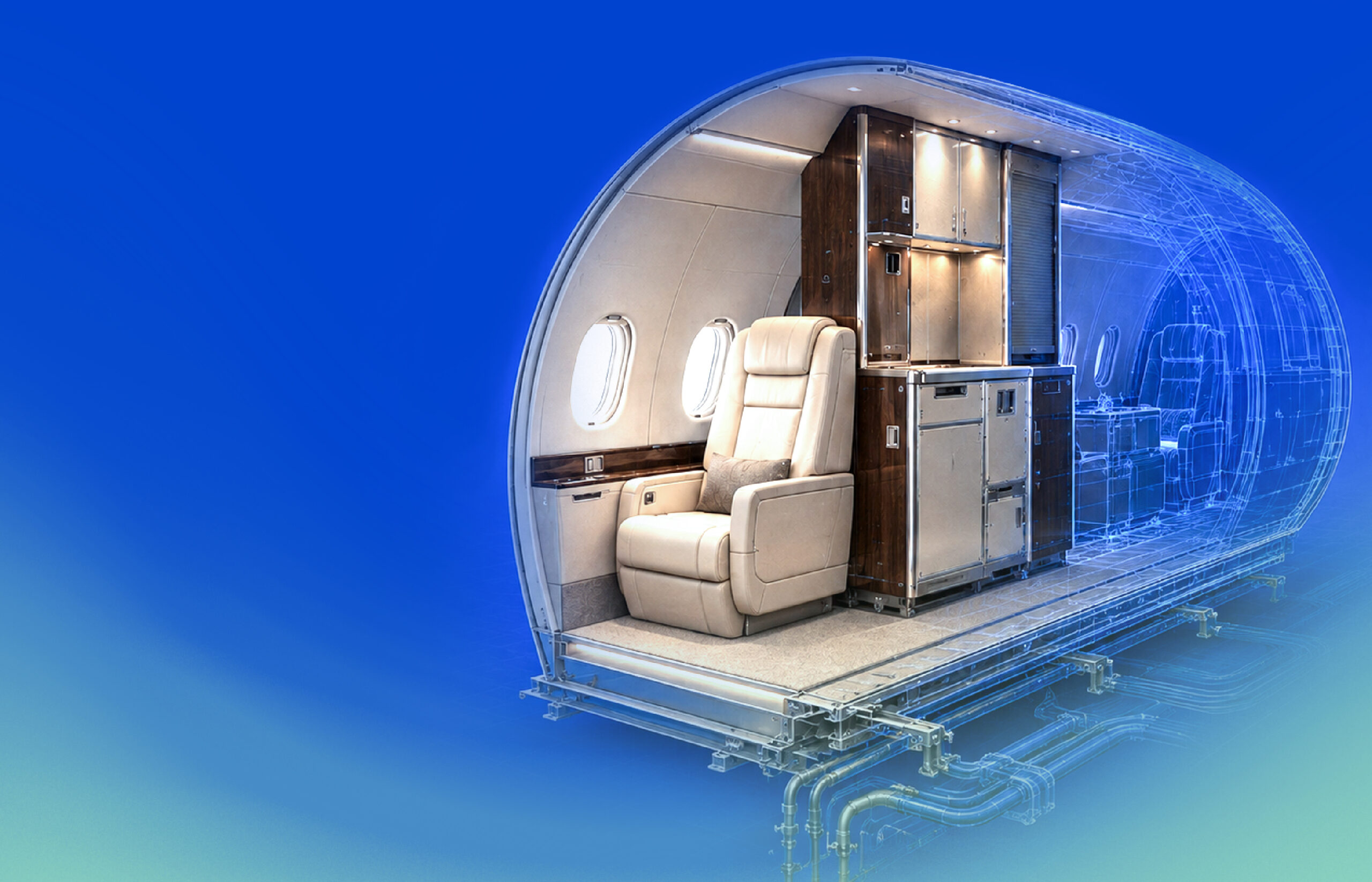
Our design capability also covers the interfaces surrounding those monuments, including modifications to primary and secondary structures, floorboard assemblies and overhead support structures, as well as mechanical integration for potable and grey water, air-conditioning and smoke-detection routing.
That breadth becomes particularly relevant when a cabin modification crosses discipline boundaries.
For OEMs, Tier-1 suppliers, completion centres and modification programmes, the objective is straightforward: resolve more of the aircraft around the monument while design decisions are still flexible.
A strong aircraft interior monument design programme reaches installation with fewer open interfaces, fewer late engineering loops and a far more stable definition of what actually has to go onto the aircraft.