
3
July, 2026
Engineering Outsourcing Services for Scalable Design and Drafting Capacity
Every engineering team has a queue.
Design updates. CAD conversions. BIM models. Manufacturing drawings. Plant modifications. Simulation support. Documentation cleanup. Legacy data migration. Change requests. As-built updates.
The work keeps moving, but internal capacity does not always move with it.
That is why engineering outsourcing services have become a practical way for global companies to scale design, drafting, documentation, and engineering design services without slowing down core teams.
The goal is not only cost reduction. The stronger value is flexible capacity, faster delivery, and access to engineering skills when internal teams are already stretched.
Why Engineering Teams Need Scalable Capacity
Engineering demand rarely arrives in a neat line.
A product launch may need rapid detailing support. A plant upgrade may suddenly require as-built drawings. A construction project may need BIM coordination. An aerospace program may need documentation support. A manufacturing team may need design changes across hundreds of parts.
Internal teams often have the technical knowledge, but they may not have enough bandwidth for every production-level task.
This creates pressure in areas such as:
- 2D drafting
- 3D modelling
- Design detailing
- CAD conversion
- BIM modelling
- Reverse engineering
- Simulation support
- Technical documentation
- Manufacturing drawings
- Plant engineering updates
- As-built documentation
Engineering outsourcing services help companies handle this workload without constantly hiring for every demand spike.
Engineering Services Outsourcing Is Becoming a Delivery Strategy
Engineering services outsourcing is no longer used only for overflow work.
Many global companies now use outsourced engineering services as a structured delivery model for recurring design, drafting, modelling, documentation, and engineering support needs.
This shift is happening because engineering teams are expected to deliver more with tighter timelines, distributed teams, evolving standards, and rising documentation demands.
At the same time, hiring skilled engineers, CAD specialists, BIM modellers, and domain experts can be slow and expensive.
Outsourcing gives companies a flexible engineering layer around their core teams. Internal experts can stay focused on design decisions, reviews, client communication, and technical ownership, while outsourced teams support production-heavy work.
What Engineering Work Can Be Outsourced?
Engineering outsourcing works best when responsibilities are clearly defined.
Common outsourcing areas include:
1. CAD Outsourcing Services
CAD outsourcing services include 2D drafting, manufacturing drawings, layout drawings, assembly drawings, CAD conversion, drawing updates, and design documentation.
This is useful when engineering teams have large drafting volumes, revision-heavy projects, or old drawings that need to be converted into current CAD formats.
2. Design Outsourcing Services
Design outsourcing services can support product design, concept detailing, model updates, legacy drawing conversion, component development, and engineering change documentation.
This helps internal teams move faster without losing control over final technical decisions.
3. Drafting Outsourcing
Drafting outsourcing helps companies manage drawing backlogs, production drawing packages, standardization work, and documentation updates.
This is especially useful when senior engineers are spending too much time on repetitive drawing work instead of engineering review and problem-solving.
4. Mechanical Engineering Outsourcing
Mechanical engineering outsourcing can include part modelling, assembly modelling, sheet metal design, equipment modelling, manufacturing drawings, tolerance updates, and design support.
It is often used by companies in industrial machinery, automotive, aerospace, construction equipment, and manufacturing.
5. BIM and AEC Support
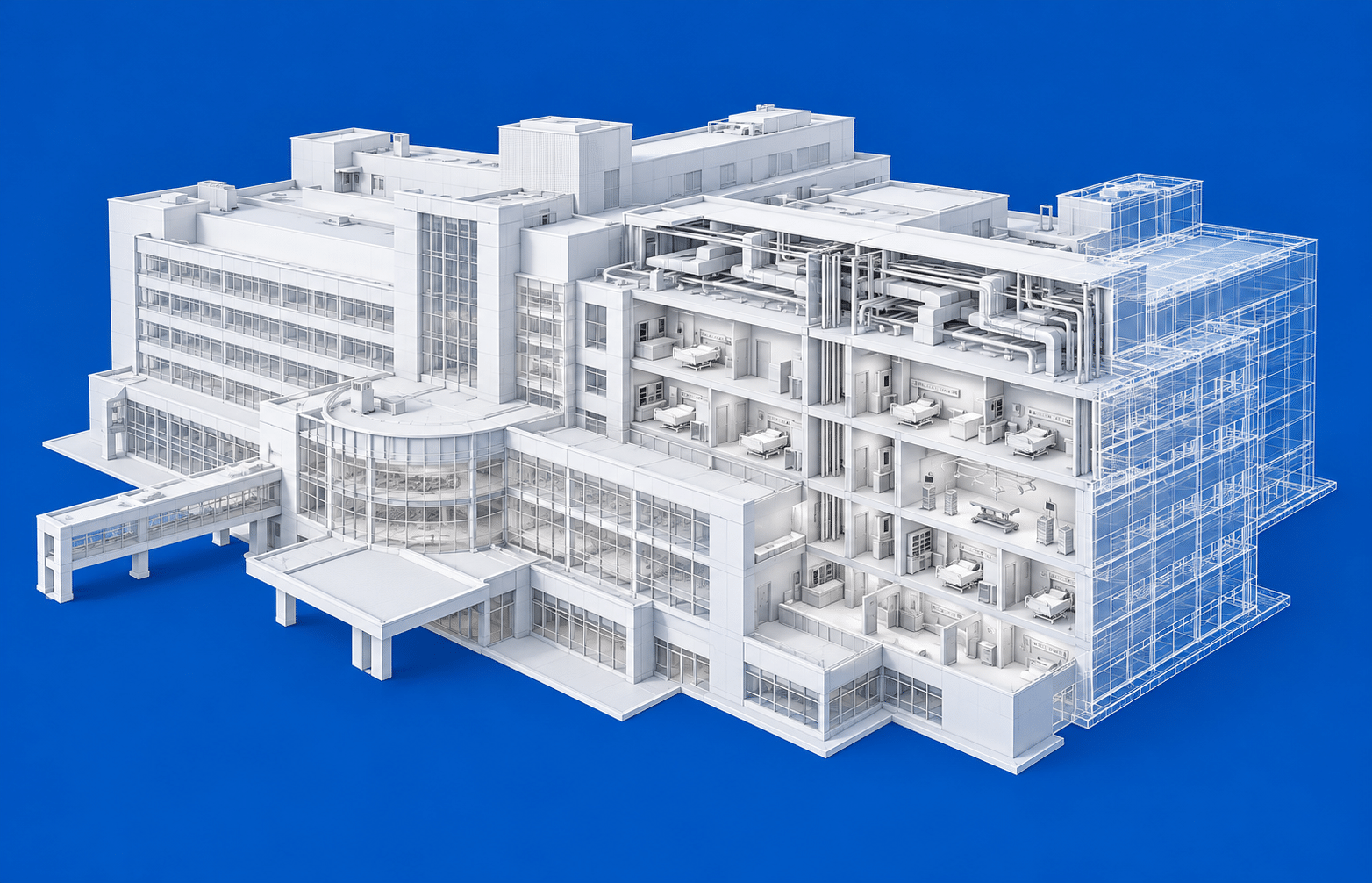
AEC teams use outsourced engineering services for architectural, structural, and MEP modelling, clash detection, scan-to-BIM, shop drawings, and as-built model updates.
This gives project teams additional modelling and coordination capacity during demanding delivery phases.
6. Plant Engineering Support
Plant owners, EPCs, and engineering firms may outsource P&IDs, equipment layouts, piping support drawings, structural drawings, electrical layouts, and documentation updates.
For brownfield facilities, this can also include as-built documentation and modification support.
7. Simulation and Analysis Support
FEA, CFD, thermal analysis, and structural analysis can support design validation and reduce physical testing cycles.
Outsourcing this work can help companies access specialized analysis support without building every capability internally.
How Outsourcing Improves Delivery
Good engineering outsourcing services do more than add people to a project.
They add delivery capacity with process.
When structured well, outsourcing helps companies:
- Clear documentation backlogs
- Support peak workloads
- Reduce turnaround time
- Improve drawing quality
- Standardize templates and outputs
- Support multiple projects in parallel
- Free senior engineers for core decisions
- Maintain delivery continuity across time zones
- Scale up or down based on project demand
For example, a core engineering team can retain design ownership while an outsourced team manages CAD detailing, drawing updates, model clean-up, and documentation packages.
This keeps internal engineers focused on judgement-heavy work.
What Makes Engineering Outsourcing Successful?
Outsourcing fails when it is treated like task dumping.
It works when the engagement is built around clarity, governance, and technical understanding.
A strong engineering outsourcing model needs:
- Clear scope definition
- Defined quality checks
- Engineering standards and templates
- Secure data-sharing practices
- Revision control
- Regular review cadence
- Clear ownership of technical decisions
- Skilled project coordination
- Domain understanding
The outsourced team must understand the client’s engineering environment, tools, standards, file structures, workflows, and delivery expectations.
This is what separates reliable outsourced engineering services from simple manpower support.
Why Domain Knowledge Matters
Engineering is not generic production work.
A drawing for aerospace is different from a drawing for industrial equipment. BIM coordination for a data centre is different from BIM support for a residential project. Plant engineering documentation requires different thinking from automotive product design.
Domain knowledge helps outsourcing teams ask better questions, follow the right standards, and reduce avoidable rework.
This matters across industries such as:
- Aerospace
- Automotive
- Industrial machinery
- Plant engineering
- Construction and heavy equipment
- Oil and gas
- Energy
- AEC and BIM
- Manufacturing
Mechanical engineering outsourcing, CAD outsourcing services, plant engineering support, and BIM coordination all need different technical judgement.
The right partner should bring both engineering capability and delivery maturity.
Outsourcing and Data Security
Global companies also need confidence in how their engineering data is handled.
Engineering files may include proprietary designs, product details, plant layouts, supplier data, process information, manufacturing drawings, and customer documentation.
Security cannot be an afterthought.
Before working with an outsourcing partner, companies should review:
- Information security practices
- Access controls
- Data transfer methods
- Confidentiality agreements
- Project-level permissions
- Tool and platform controls
- Quality documentation
- Compliance expectations
A scalable outsourcing model must protect both delivery speed and engineering confidentiality.
How TAAL Tech Supports Engineering Outsourcing Services
At TAAL Tech, we support global companies with engineering outsourcing services across design, drafting, modelling, BIM, plant engineering, manufacturing engineering, aerospace engineering, simulation support, and technical documentation.
Our teams work as an extension of client engineering functions. We help manage production workloads, documentation backlogs, design support tasks, model updates, CAD outsourcing services, drafting outsourcing, and project delivery requirements with structured quality processes.
This allows clients to scale capacity without losing control over engineering standards, timelines, or technical ownership.