

20
February, 2026
Sustainable Data Centers: Turning Waste Heat into a Resource for District Heating and Cooling
Data centers run on a simple rule: keep computing reliable by keeping temperatures controlled. That discipline creates a predictable byproduct, a steady stream of recoverable heat. As digital demand grows, the scale of that heat is becoming too large to treat as an unavoidable loss. The International Energy Agency estimates data centers consumed about 460 TWh of electricity in 2022 and projects consumption could exceed 1,000 TWh by 2026, roughly equivalent to Japan’s electricity consumption. Nearly all of that electricity ultimately appears as heat in one form or another.
In cities with established district heating and cooling networks, waste heat reuse is moving from a sustainability idea to an infrastructure strategy. The Successful Projects are not driven by good intentions alone. They are engineered like utility systems, with clear temperature strategy, stable hydraulics, defined interfaces, robust controls, and commissioning discipline.
This blog explains the engineering chain behind data center waste heat recovery, how integration with district heating and cooling is delivered in practice, and how TAAL Tech supports large-scale reuse systems through BIM-led digital engineering focused on constructability, safety, and efficiency.
Data Center Waste Heat Recovery: Why the Opportunity Is Now
Waste heat recovery works when three conditions align.
-
- A stable heat source. Data centers produce continuous thermal, unlike many industrial processes with intermittent loads.
- A real heat sink. District heating and cooling networks can absorb heat at city scale, which makes reuse viable beyond individual buildings.
- Utility-grade integration. The reuse plant must perform reliably under real operating modes, including partial load, faults, and seasonal transitions.
Where cities have built commercial pathways for excess heat, adoption accelerates. Stockholm’s district energy operator, for example, has an “Open District Heating” style heat recovery offering aimed at connecting excess heat producers into the network rather than rejecting that heat.
Heat Recovery System Design Inside the Data Center
A heat reuse project begins with a controlled interface to the data center cooling architecture. The objective is to extract heat without compromising uptime, maintainability, or water quality strategy.
A robust internal heat recovery design typically includes:
-
- A dedicated heat recovery loop hydraulically separated from primary cooling loops
- Plate heat exchangers sized for realistic approach temperatures and fouling margins
- Redundant pumping with bypass logic for maintenance and fault conditions
- Expansion, pressurization, air separation, and filtration provisions matched to the fluid strategy
- Isolation valves and instrumentation arranged for safe commissioning and operation
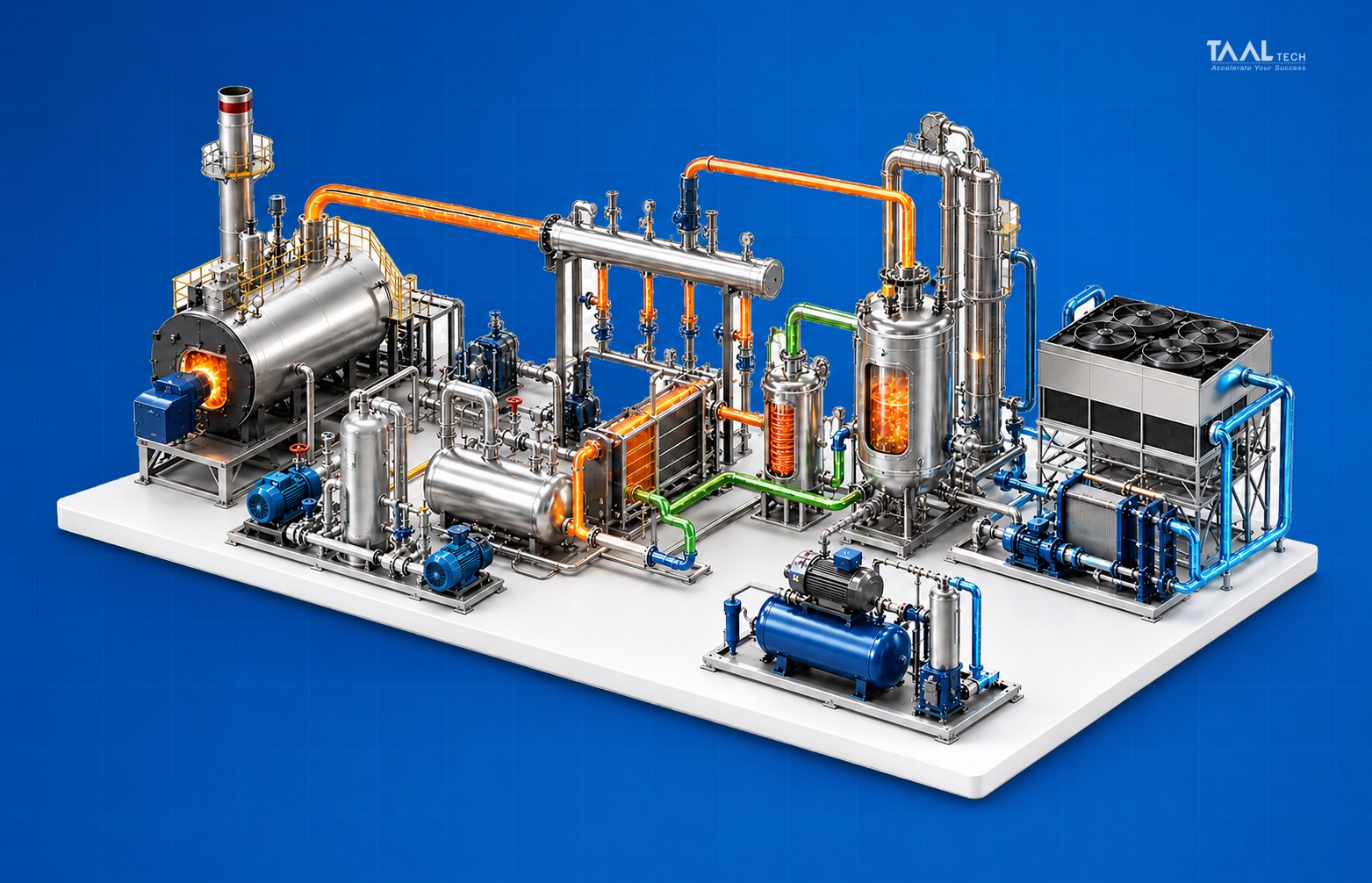
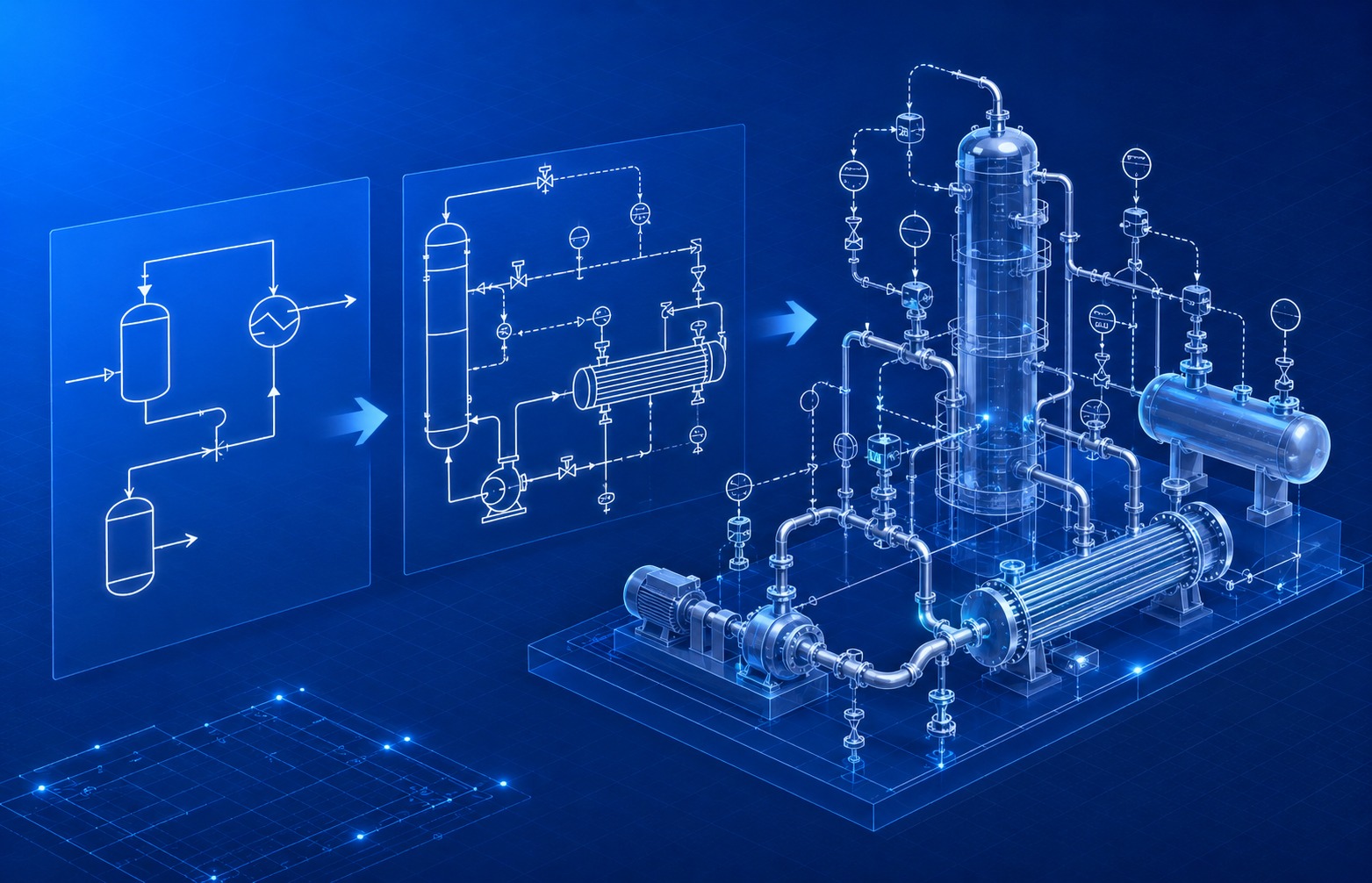
TAAL Tech’s engineering teams model these recovery loops as complete systems, not simplified diagrams. We develop exchanger station layouts, pump skids, valve trains, and access zones inside the BIM environment, then translate the coordinated model into construction-ready drawings that support safe tie-ins and predictable commissioning.
Heat Pump Temperature Lift: Converting Low-Grade Heat into District Supply
Most data center waste heat is available at temperature levels that are valuable but not always directly compatible with district supply requirements. That is why many large-scale schemes use heat pumps to raise temperature before delivering to the network.
A well-documented European pattern is to capture low-grade heat via heat exchangers, then use electrically driven heat pumps to lift the heat to district-suitable levels. In a Denmark-based installation, heat recovery infrastructure is designed to recover around 100,000 MWh per year, described as enough to warm around 7,000 homes. Complementary engineering descriptions of similar installations highlight heat pumps boosting temperatures into the 70 to 75°C range for district delivery.
What determines success is not the headline temperature. It is the set of design choices behind it:
-
- Selecting the heat pump strategy that matches network temperature levels and seasonal variation
- Defining exchanger approach temperatures so performance is stable at partial load
- Managing hydraulics so both sides remain stable across ramp-up and ramp-down conditions
- Designing bypass and fault modes that protect both the data center cooling system and the district network
- Ensuring the plant can be isolated and serviced without collapsing the entire recovery operation
TAAL Tech’s digital engineering teams coordinate heat pump plant interfaces in BIM with a constructability mindset: equipment clearances, lifting paths, pipe routing and supports, insulation allowances, safe access routes, and maintainable valve placement. The goal is to ensure the installed system can be operated and serviced as designed, not just fitted into available space.
District Heating Network Integration: Interfaces, Metering, and Protection
Connecting to a district heating or cooling network is not a standard piping tie-in. It is a live utility interface with strict constraints and commercial accountability.
A district interface package typically requires:
-
- Defined supply and return boundaries, pressure class, and allowable temperature ranges
- Metering skids with access for calibration and maintenance
- Isolation strategy and protection logic to support safe shutdown states
- Commissioning sequences aligned to network operator procedures
- Documentation that defines operating responsibilities and abnormal-condition response
This is where projects often lose time. If interface boundaries, metering requirements, and isolation philosophy are left vague, the tie-in becomes a late-stage coordination exercise across civil, mechanical, electrical, instrumentation, and controls.
TAAL Tech models district interface stations as controlled modules within BIM, with defined isolation points, metering provisions, clear access, and commissioning-friendly layouts. The same interface package is then carried into construction drawings and method statements so installation can be executed safely within planned shutdown windows.
Pumping and Hydraulics: Why Flow Stability Drives Performance
At scale, heat reuse is a hydraulics problem first. If flow stability is poor, heat transfer becomes unpredictable, control loops hunt, and both the data center and the district network experience operational risk.
A hydraulically stable reuse system typically includes:
-
- Pump selection based on realistic head calculations and system curves
- Variable speed strategy designed for partial load and seasonal transitions
- Differential pressure control points set to reflect true critical paths
- Balancing and commissioning provisions that are measurable and accessible
- Redundancy philosophy aligned to uptime objectives and offtake obligations
TAAL Tech develops pump head calculations, defines redundancy and bypass logic, and coordinates routing, supports, and valve station layouts in BIM so the physical installation matches the hydraulic intent. This is how performance is protected from the common failure mode of “it fits, but it does not behave.”
Control Sequences and Commissioning: Where Reliability Is Won
Heat recovery plants underperform when control logic is treated as an afterthought. Heat pumps, exchangers, pumps, valves, and sensors must operate as one system across operating modes.
A practical controls scope should cover:
-
- Start-up and shutdown sequences with staged enable logic
- Setpoint strategy tied to network conditions and cooling system requirements
- Fault handling and safe fallback modes that protect uptime
- Seasonal mode transitions and partial load optimization
- Trending, alarms, and verification points for performance tracking
BIM for Heat Reuse Projects: Constructability, Safety, and Maintainability
Heat recovery systems introduce dense plant rooms, live tie-ins, and high-energy equipment. BIM adds value when it is used to eliminate constructability risk and enforce safe maintenance conditions.
For heat reuse and district integration, BIM should deliver:
-
- Clash-free routing through plant rooms, risers, and service corridors
- Verified maintenance clearances for exchangers, pumps, strainers, and metering skids
- Coordinated access for insulation, valve operation, and instrumentation service
- Safe lifting and replacement paths for heavy equipment
- Clear segregation of mechanical, electrical, and controls pathways
TAAL Tech POV: Digital Engineering That Makes Heat Reuse Repeatable
Waste heat reuse becomes scalable when it is engineered like infrastructure. TAAL Tech supports owners, utilities, and delivery teams as a digital engineering partner that can carry heat reuse from concept into construction-ready reality.
We model heat recovery loops, district energy interface stations, pumping systems, and control sequences in BIM, then develop coordinated layouts, construction drawings, and commissioning-aligned documentation that de-risk delivery. The work is anchored in outcomes that matter at scale: constructability, operational safety, and measured efficiency.
Closing: From Waste Stream to Utility Resource
Data center electricity demand is rising sharply, and the available waste heat rises with it. Where district heating and cooling networks exist, waste heat recovery is already being delivered as a repeatable solution when integration is engineered end to end. Technical literature continues to expand on district heating integration pathways and the system-level choices that drive technical and economic performance.
The next wave of projects will be decided by execution: stable hydraulics, correct temperature lift strategy, defined interfaces, robust controls, and BIM-led constructability. TAAL Tech’s role is to engineer and coordinate that execution so waste heat becomes a dependable utility resource, not a missed opportunity.