
The Future of BIM in Construction & Infrastructure Projects
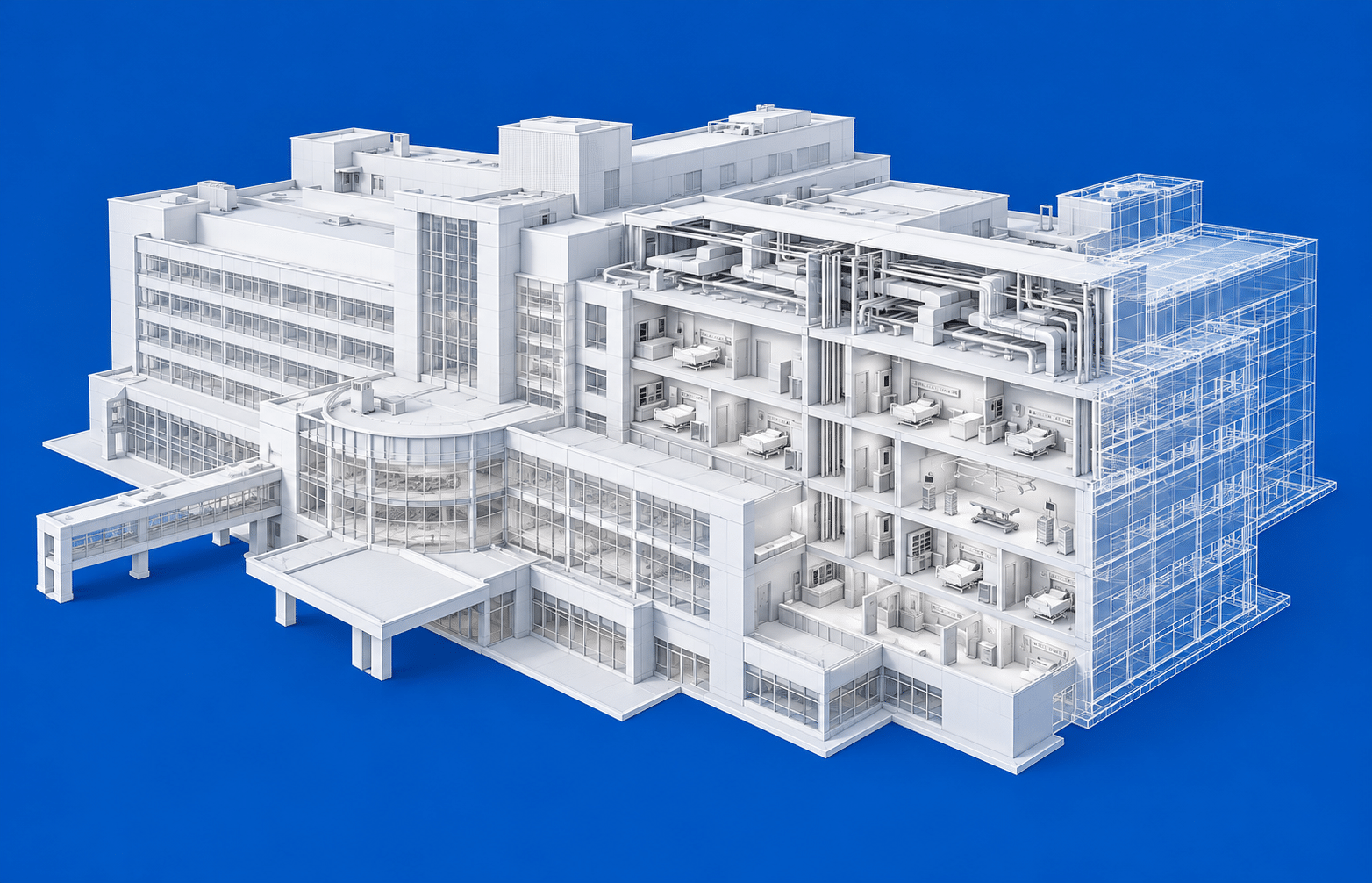
The future of BIM in construction is no longer about adopting a new software tool; it is about reshaping how owners, EPCs, contractors, and operators plan, build, and operate assets across their entire lifecycle. The global Building Information Modeling market is already worth several billion dollars and is projected to grow at double-digit CAGR over the next decade, driven by productivity pressures, sustainability targets, and regulatory mandates.
From 3D Modeling to Data-Rich Digital Platforms
The first wave of BIM in construction focused on replacing 2D drawings with coordinated 3D models. That alone reduced clashes, improved visualization, and made stakeholder communication easier.
Now, BIM technology trends are centered on turning those models into data-rich platforms. Modern BIM environments store geometry, quantities, specifications, metadata, and asset attributes in a structured way. This enables:
- Automated quantity take-off and cost estimation
- Rule-based code and standards checking
- Faster document generation (drawings, schedules, reports)
- Better change tracking and version control
The Building Information Modeling future is about models acting as “living databases” that support analysis, optimization, and decision-making—not just pretty 3D views.
BIM Adoption in Infrastructure: From Pilot to Standard
For many years, BIM adoption in infrastructure projects lagged behind buildings. That has changed. Transport, utilities, water, energy, and urban infrastructure projects are now major drivers of BIM investment.
Public agencies and government clients increasingly require BIM for complex infrastructure programs, linking its use to procurement and funding. This is because BIM benefits for infrastructure projects are clearly visible in:
- Reduced rework during construction
- Better coordination across disciplines and contractors
- Earlier identification of design and constructability issues
- More accurate handover information for long-term operation
Instead of being used on a few “flagship” schemes, BIM is progressively becoming standard practice across road, rail, metro, airport, port, and utility networks.
4D and 5D BIM: Time, Cost, and Constructability
One of the most powerful trends is the rise of 4D and 5D BIM in infrastructure and buildings. Here, 3D models are linked with:
- 4D (time): construction schedules, phasing, sequencing
- 5D (cost): unit rates, contracts, budgets, and cash flows
With BIM for construction management, teams can simulate how a project will be built before physical work begins. They can test multiple sequences, resource allocations, site logistics plans, and shutdown windows. This supports:
- Reduced schedule risk
- Clearer communication with site teams and stakeholders
- More predictable cash flow and cost control
- Improved safety planning through virtual rehearsals
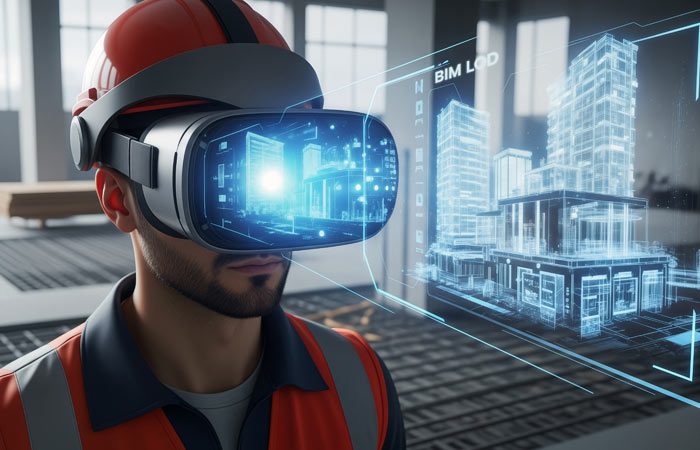
Virtual construction and simulation using BIM is especially valuable for brownfield sites, live plants, and dense urban environments, where errors and delays are costly.
Digital Twins: Extending BIM into Operations
The integration of digital twin and BIM is the next major step. BIM has traditionally been strongest in design and construction; digital twins extend that value into operations by connecting:
- As-built BIM models
- Sensor data and IoT devices
- SCADA, BMS, and control systems
- Asset management, maintenance, and ERP platforms
In infrastructure projects—such as highways, rail corridors, power networks, and water systems—digital twins built on BIM foundations allow operators to:
- Monitor asset condition in near real time
- Run “what-if” scenarios for demand, capacity, and disruptions
- Plan predictive maintenance instead of reactive interventions
- Support resilience and safety planning during extreme events
For owners, this is where the long-term financial and operational benefits of BIM become most visible: lower lifecycle costs, higher availability, and better-informed capital planning.
BIM for Collaboration, Coordination, and Risk Reduction
A consistent theme across projects is the value of BIM for project collaboration and coordination. Shared models and cloud-based collaboration platforms help align:
- Architects, structural, MEPF, and specialist designers
- General contractors and subcontractors
- Fabricators and suppliers
- Owners, operators, and facility managers
Instead of each stakeholder maintaining separate information silos, BIM creates a common digital environment where changes, issues, and approvals are tracked transparently. This reduces design clashes, RFIs, disputes, and claims—and improves trust across the value chain.
When combined with integrated project delivery or similar procurement models, BIM becomes a critical enabler of collective risk management and more predictable outcomes.
Industrial, Commercial, and Complex Building Use Cases
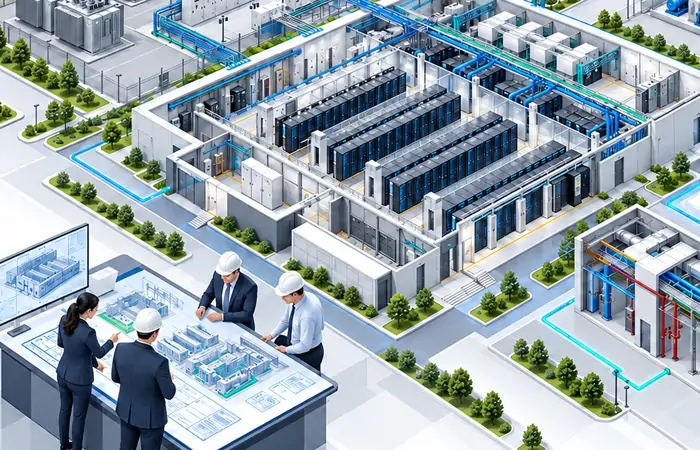
BIM in industrial and commercial building design is moving rapidly from early adoption to maturity. Sectors with complex systems, strict uptime requirements, or regulatory constraints are at the forefront, such as:
- Data centers and technology facilities
- Process plants and manufacturing units
- Hospitals, pharma, and life science facilities
- Airports, logistics hubs, and large commercial developments
In these environments, 3D modeling and BIM in construction enable dense mechanical, electrical, plumbing, and fire systems to be coordinated with high precision. Beyond design, BIM supports:
- Prefabrication and modular construction
- Maintenance-friendly layouts and access strategies
- Space and asset management over the building’s lifecycle
- Energy and performance optimization through simulation
Here, BIM is not an add-on—it is the backbone that holds together architecture, engineering, construction, commissioning, and operations.
Key BIM Technology Trends to Watch
Several digital construction technologies are reshaping the BIM landscape and accelerating its future:
- AI-assisted design and checking: Automated clash detection, code compliance checks, and design suggestions reduce manual effort and catch issues earlier.
- BIM–GIS convergence: Integrating BIM models with geospatial context helps infrastructure teams understand terrain, environment, utilities, and urban constraints.
- Open standards and data interoperability: Use of IFC, open APIs, and standardized data dictionaries makes it easier to connect BIM with asset management, ERP, and facility management systems.
- Industrialized construction and robotics: Model-driven prefabrication, assembly, and automated surveying rely on high-quality BIM as a single source of truth.
Together, these BIM technology trends point to a future where models are not just project artifacts, but enterprise data assets used across portfolios and organizations.
What Forward-Looking Owners and EPCs Should Do Now
For organizations investing in BIM in infrastructure projects or complex buildings, the strategic question is: how do we capture full lifecycle value and scale it across programs, not just individual jobs?
Leading owners and EPCs are:
- Defining clear BIM and digital twin strategies aligned with business goals
- Standardizing information requirements, naming conventions, and model structures across their portfolios
- Linking BIM deliverables to procurement, construction, commissioning, and operations so that data is not lost at handover
- Building long-term partnerships with engineering and construction providers who combine domain expertise with advanced BIM and digital capabilities
In this context, an engineering partner like TAAL Tech, which brings multi-disciplinary engineering, BIM-led delivery, and digital twin readiness together across plants, buildings, and infrastructure, can help owners move from isolated BIM pilots to a coherent, scalable digital strategy.
From Projects to Living Assets
The future of BIM in construction and infrastructure projects is about more than coordinated drawings; it is about delivering living digital assets that evolve over 20–40 years. As BIM for construction management, virtual construction and simulation, and digital twin integration mature, organizations that embrace BIM as a strategic capability—not just a compliance requirement—will see the greatest returns.
For decision-makers seeking engineering services today, the differentiator will be partners and solutions that treat BIM as the foundation for smarter, safer, and more resilient assets, turning every project into a long-term performance advantage.