
28
August, 2026
Process Plant Energy Optimisation: Are You Improving Equipment or the Entire System?
A more efficient pump, boiler or compressor can reduce energy consumption locally. It may still produce limited savings across the plant.
The larger opportunities often sit between systems: where heat is rejected while another process requires heating, where steam pressure exceeds actual demand, or where production variability keeps utilities operating far from their efficient range.
Energy Has Become a Production Decision
Industry accounted for 23.9% of the EU’s final energy consumption in 2024. Electricity and natural gas represented 33.3% and 31.9% of industrial consumption respectively. The chemical and petrochemical sector alone used 1,888 petajoules, or 22.9% of the EU industrial total.
At this scale, energy efficiency cannot remain a collection of maintenance projects. It affects operating margin, asset competitiveness, production planning and decarbonisation investment.
Effective process plant energy optimisation begins by understanding how energy moves through the entire process.
Start with the Process Demand
Many energy programmes begin at the utility equipment. The boiler, compressor or chiller is assessed first because its consumption is visible and measurable.
That can miss a more fundamental question: why does the process require this amount and quality of energy?
Process demand may be influenced by:
- Operating temperature and pressure
- Reflux or recycle rate
- Feed composition
- Product specifications
- Equipment fouling
- Heat-exchanger approach temperatures
- Batch sequencing
- Start-up and shutdown practices
- Control philosophy
- Production rate and product mix
Improving utility efficiency without reviewing these variables can make an inefficient demand pattern cheaper to serve rather than removing it.
The US Department of Energy reports that process heating accounted for 51% of onsite manufacturing energy use in 2018, with approximately one-third of that energy ultimately lost as waste heat.
This makes process demand and heat recovery central to industrial energy optimisation.
Utility Systems Should Be Modelled Together
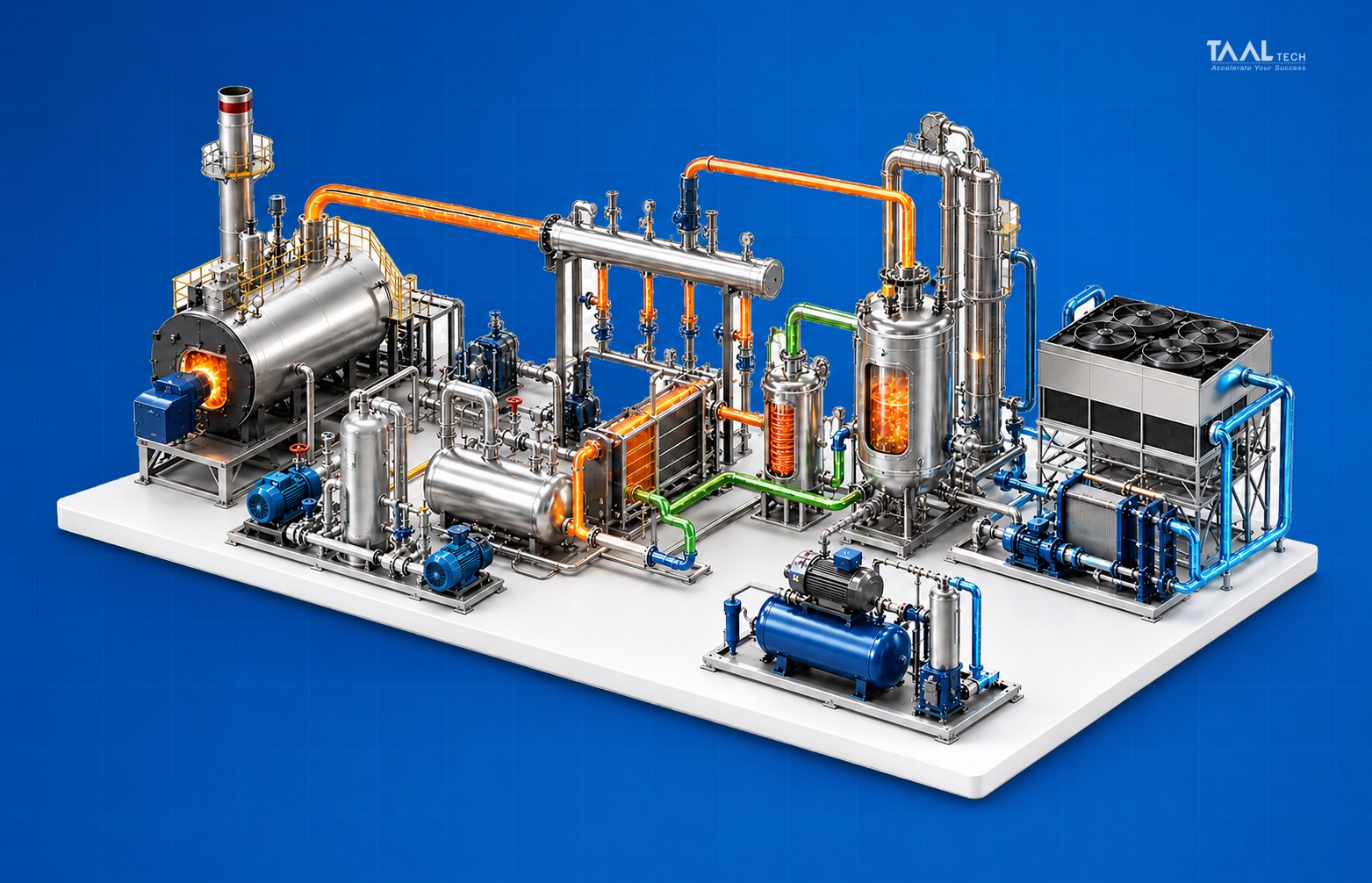
Steam, cooling water, compressed air, electricity, fuel gas and nitrogen are often evaluated separately. Operationally, they are connected.
Reducing steam use in one process may:
- Lower boiler fuel consumption
- Reduce condensate return
- Change boiler-feedwater demand
- Affect back-pressure power generation
- Reduce cooling duty elsewhere
- Alter the site’s electricity balance
Recovering more process heat may reduce fired-heater duty but increase pumping requirements or cooling demand under certain operating cases.
The net benefit becomes clear only when the interactions are assessed across the complete utility system.
A utility balance study can establish:
- Current production and demand
- Peak and average loads
- Seasonal variation
- Import and export flows
- Distribution losses
- Spare capacity
- Pressure-level mismatches
- Major consumers
- Constraints during higher production
The result provides a basis for prioritising projects by their system-level effect.
Average Data Can Hide the Best Opportunities
Monthly energy bills are useful for tracking overall performance. They do not explain how the plant behaves across different operating states.
A plant may show stable monthly energy intensity while experiencing:
- High steam venting during low production
- Excess compressed-air generation overnight
- Cooling-water constraints during peak ambient temperatures
- Utility demand spikes during batch transitions
- Low boiler efficiency at partial load
- Simultaneous heating and cooling
- Energy-intensive start-ups after short interruptions
Optimisation therefore needs operating data at a resolution that reflects process behaviour.
Useful comparisons include:
- Energy use per unit of production
- Base load when production is stopped
- Consumption across different product grades
- Utility demand at minimum and maximum throughput
- Performance before and after cleaning
- Energy use during start-up and stable operation
These relationships help separate unavoidable process demand from losses created by operation, control or system design.
Steam Optimisation Extends Beyond the Boiler
Boiler efficiency receives significant attention because fuel use is concentrated and measurable. However, steam-system performance also depends on distribution, pressure control, condensate recovery and end use.
A US Department of Energy assessment estimated energy losses of 30% to 35% across steam generation and distribution in manufacturing systems. The figures are indicative rather than plant-specific, but they show why boiler-only optimisation can leave substantial value untouched.
A system-level steam review should examine:
- Whether each user needs the supplied pressure
- Steam generation at part load
- Pressure-reducing stations
- Condensate recovery
- Flash-steam utilisation
- Steam traps and distribution losses
- Boiler blowdown
- Deaerator operation
- Opportunities for heat recovery
- Interaction with cogeneration
Reducing header pressure may lower distribution losses, but only if remote and critical users continue to receive adequate pressure. Increasing condensate recovery can save heat, water and treatment chemicals, provided contamination risks are managed.
The best solution depends on how the system operates as a network.
Compressed Air Should Be Treated as a Process Utility
Compressed-air projects often focus on leak repair. This is important: the US Department of Energy notes that poorly maintained compressed-air systems can lose 20% to 30% of air capacity and power through leakage.
However, leakage is only one part of the opportunity.
Plants should also examine:
- Whether compressed air is required for the application
- Pressure at the point of use
- Artificial demand created by excessive pressure
- Compressor sequencing
- Part-load performance
- Pressure drop across dryers, filters and distribution
- Storage capacity
- Inappropriate uses
- Demand peaks created by production sequencing
A highly efficient compressor will still waste energy if the plant operates the entire network at a higher pressure to compensate for one constrained user.
Waste Heat Needs a Credible Sink
Industrial waste-heat recovery can appear attractive when a plant has high-temperature exhaust, hot process streams or large cooling loads.
The US Department of Energy estimates that 20% to 50% of industrial energy input may be lost as waste heat through exhaust gases, cooling water, equipment surfaces and heated products.
Not all of this energy is technically or economically recoverable.
A viable opportunity requires alignment between:
- Heat-source temperature
- Heat-sink temperature
- Heat quantity
- Operating schedules
- Distance between source and sink
- Process compatibility
- Fouling and corrosion risk
- Required reliability
- Capital cost
A large heat source creates limited value if the demand is intermittent, distant or available at an unsuitable temperature.
This is why heat recovery should be assessed within the wider process and utility balance instead of as a standalone equipment project.
Production Constraints Must Remain Visible
Energy savings that reduce throughput, product quality or operating flexibility will struggle to maintain organisational support.
A plant may intentionally operate with additional utility capacity to manage:
- Feed variability
- Seasonal conditions
- Rapid production changes
- Equipment fouling
- Maintenance outages
- Multiple product grades
The goal of plant energy efficiency is not to remove all operating margin. It is to understand which margins are required and which are historical.
Process simulations can test the effect of potential changes before implementation. This is particularly useful when optimisation involves operating pressure, reflux, recycle, heat integration or equipment duty.
The study should show how the proposed measure performs under normal, peak, turndown and upset-related conditions.
How TAAL Tech Can Support Process Plant Energy Optimisation
TAAL Tech supports process plant energy optimisation through connected process-engineering capabilities, including:
- Energy optimisation and efficiency studies
- Process simulations using Aspen HYSYS, Aspen Plus and PRO-II
- Mass and energy balances
- Utility balances for steam, water, nitrogen, air and fuel gas
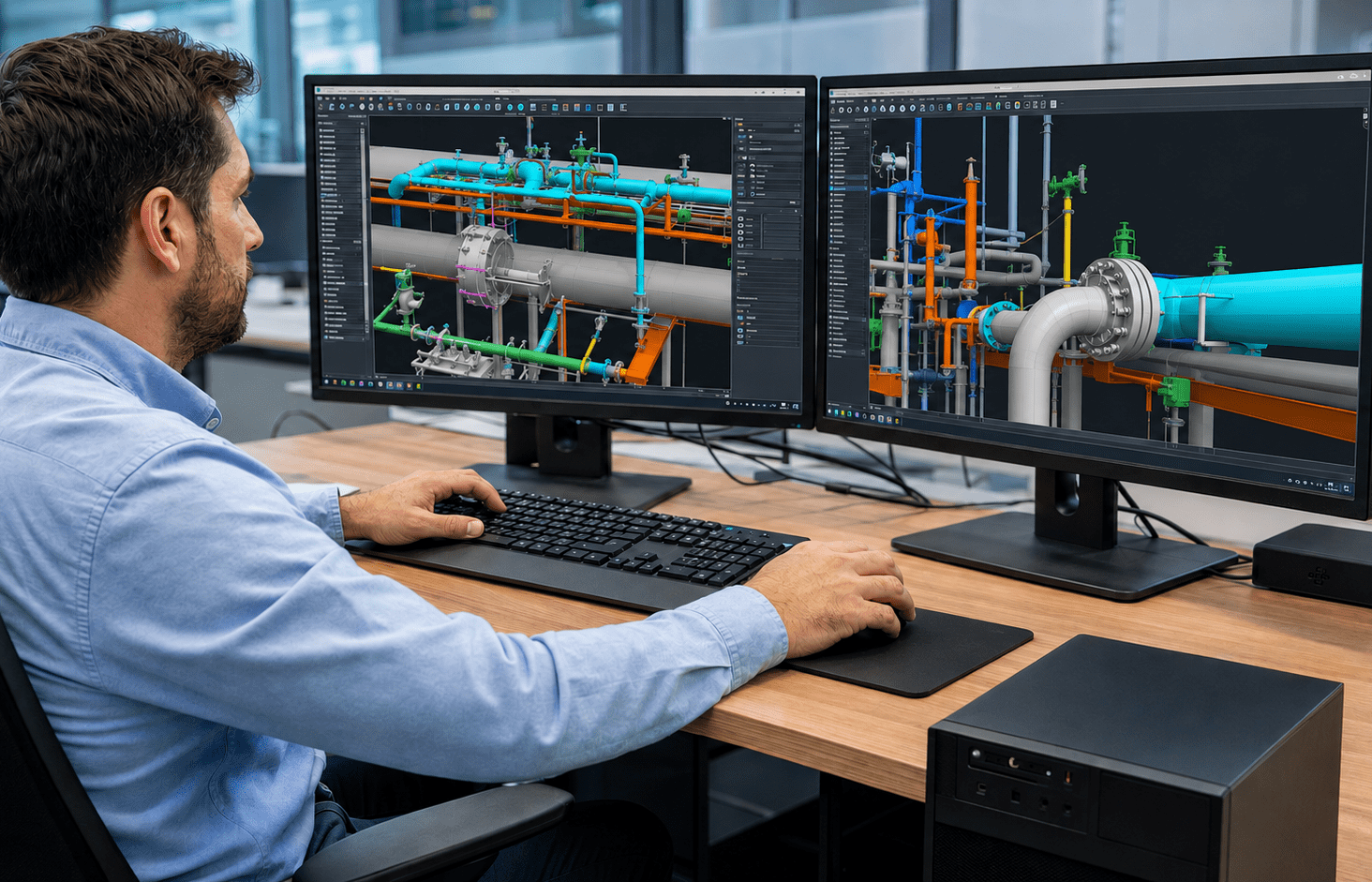
- Equipment sizing and hydraulic calculations
- Line sizing and fluid-flow analysis
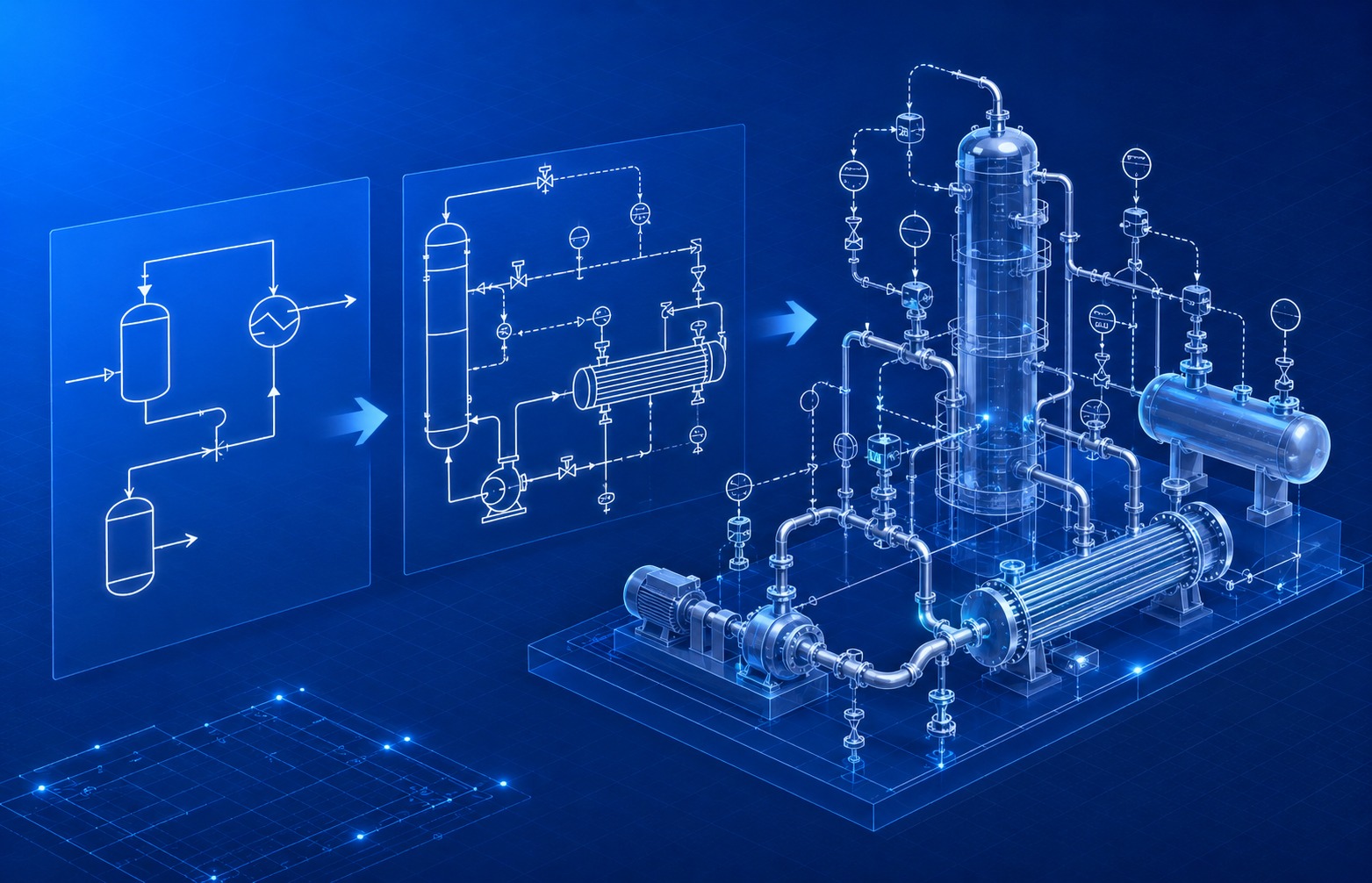
- PFD and P&ID development
- Process safety reviews
- FAT and SAT support for process systems
This allows improvement opportunities to be evaluated against process requirements, utility capacity and operating constraints.
TAAL Tech can support focused studies for specific systems or provide multidisciplinary engineering input as opportunities move into implementation.
Optimise the Plant Boundary
Equipment-level improvements remain important. They can deliver quick savings and create momentum for a wider energy programme.
The risk lies in evaluating each opportunity in isolation. A local reduction may shift demand elsewhere, create a new constraint or deliver less benefit than the equipment calculation suggests.
Strong process plant energy optimisation connects process demand, utility generation, distribution and operating behaviour. It helps plant leaders invest where the complete system, rather than one item of equipment, produces the return.