
8
May, 2026
BIM & ACC for Global Engineering Teams: Working Securely in an ISO 27001 World
Global engineering delivery now depends on shared models, cloud platforms, multidisciplinary coordination, and near-real-time design updates across time zones. For clients, the question is no longer whether distributed BIM teams can collaborate. The question is whether they can collaborate without losing control of project data, model versions, access rights, and sensitive engineering information.
This blog looks at how Building Information Modeling (BIM) and Autodesk Construction Cloud (ACC) can support secure global delivery when backed by ISO 27001 practices, ISO 19650 workflows, controlled common data environments, and disciplined project governance.
Why Secure BIM Collaboration Has Become a Boardroom Issue
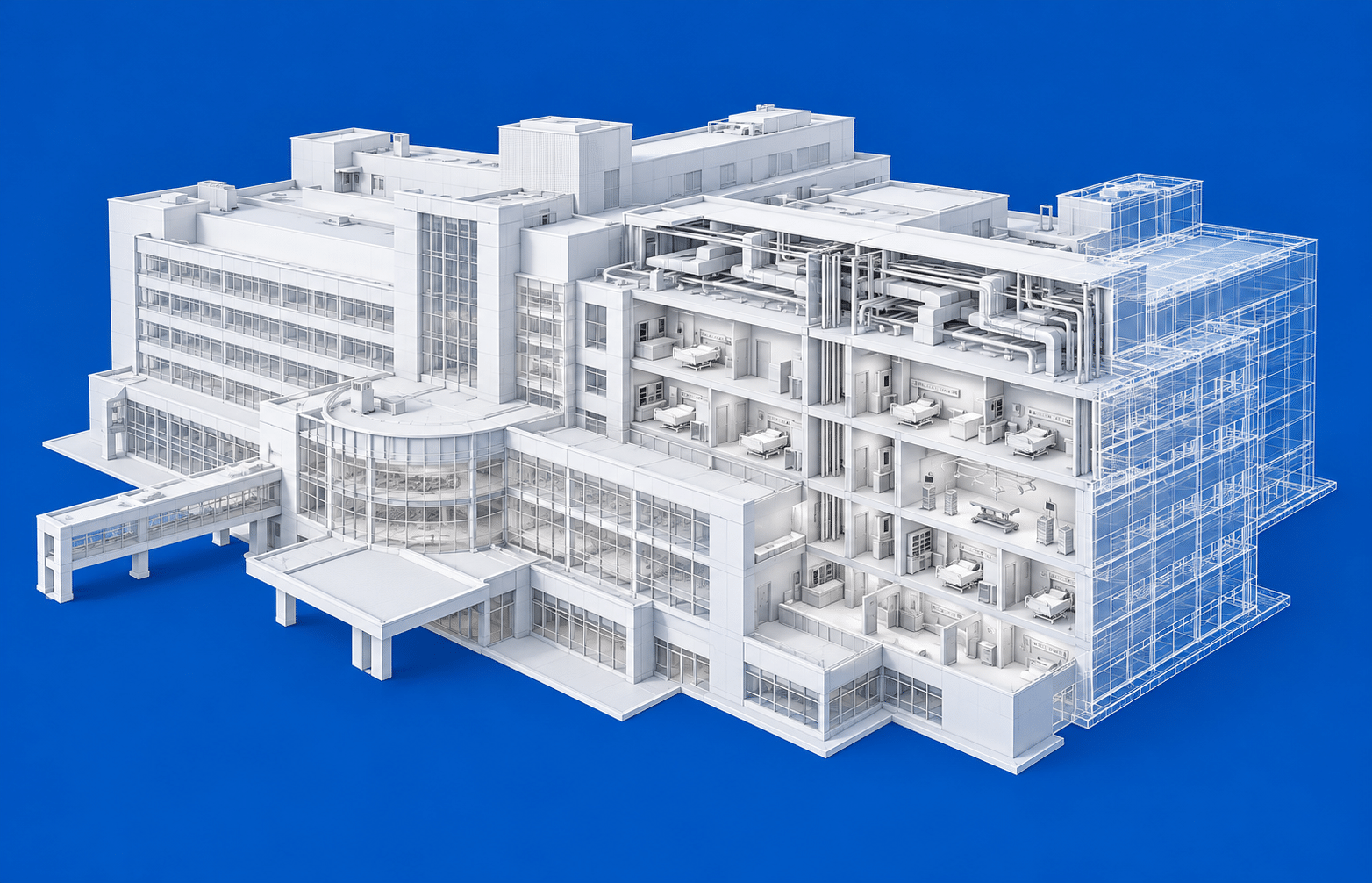
BIM models are no longer simple design files. They contain geometry, asset information, design intent, specifications, quantities, interfaces, construction sequencing inputs, and in many cases, information that may affect procurement, operations, security, and future facility management.
For infrastructure, data centers, industrial plants, healthcare facilities, airports, rail systems, utilities, defense-adjacent programs, and large commercial developments, this information has real commercial and operational value. A wrong version issued for coordination can trigger rework. An uncontrolled model download can expose intellectual property. A weak permission structure can give external users access to information beyond their scope.
This is why secure cloud-based BIM delivery has become a serious project risk topic. It sits at the intersection of engineering management, cybersecurity, document control, and client assurance.
ISO/IEC 27001 gives organizations a formal structure for information security management. ISO describes it as the best-known standard for information security management systems, designed to help organizations establish, implement, maintain, and continually improve information security controls. For BIM delivery, that mindset matters because security is not only about the platform. It is about people, process, access, review, release, and traceability.
Where ISO 19650 Fits into Secure BIM Delivery
ISO 19650 is important because it brings structure to information management across the lifecycle of a built asset. BSI describes the ISO 19650 suite as covering concepts and principles, delivery phase information management, operational phase information management, information exchange, and security-minded information management.
That is highly relevant for global teams. When multiple organizations work on one project, the main risk is not always poor modeling skill. It is poor information discipline.
A secure BIM workflow needs clarity on:
- who creates information
- who reviews it
- who approves it
- when it can be shared
- what status it carries
- what revision is valid
- where it is stored
- who can access it
- how previous versions are preserved
ISO 19650 encourages teams to manage project information through a common data environment (CDE), with controlled information containers, metadata, revision codes, and status codes. UK BIM Framework guidance notes that information containers in the CDE should include status codes, revision codes, and classification codes so teams use information correctly.
In plain terms, ISO 19650 helps prevent the most common BIM collaboration problem: everyone working hard, but not always working from the right information.
Why Autodesk Construction Cloud Matters for Distributed Teams
Autodesk Construction Cloud supports cloud-based design and construction collaboration through tools such as Autodesk Docs, BIM Collaborate, and BIM Collaborate Pro. Autodesk Docs is positioned as a cloud-based common data environment for document management and control across project teams, including review and approval workflows.
For international engineering teams, that matters because a CDE becomes the controlled project workspace. Instead of sending models through email, unmanaged file-sharing links, or local server extracts, teams can work within structured folders, permission groups, review workflows, and version-controlled document environments.
This is especially important in global delivery models where engineering support may involve:
- architectural, structural, mechanical, electrical, plumbing, fire protection, and process coordination
- BIM modeling and clash resolution
- construction documentation support
- scan-to-BIM and as-built model updates
- data center, plant, commercial, and infrastructure design coordination
- offshore and nearshore production teams supporting US or European stakeholders
The value of ACC is not only that it lets people collaborate. The value is that collaboration can be made traceable.
Autodesk’s document management capabilities include automatic version control as changes are published, with the ability to view previous versions and compare versions. Its transmittal functionality also supports audit trails covering document versioning, recipients, and actions taken.
For a BIM manager or project director, that traceability is critical. It helps answer practical questions: Who received this issue? Which version was approved? Was the model shared for coordination or construction? Was the superseded file still accessible? Did a consultant act on the correct revision?
Permission Structures: The First Layer of BIM Security
Secure BIM delivery starts with access control. Not every team member needs access to every model, folder, issue, package, or deliverable.
ACC supports permissions for users, roles, and companies, allowing project administrators to grant specific access to the people who need the data and tools required for their scope. Autodesk also notes that account admins can assign and unassign product access through user management.
This supports a basic but powerful principle: access should follow the project role, not personal convenience.
A practical permission structure may separate:
- internal work-in-progress modeling areas
- shared coordination folders
- published client deliverables
- discipline-specific folders
- external consultant access
- contractor review areas
- archive and record information
- restricted commercial or security-sensitive information
This is where many projects get into trouble. They start with a broad access model to keep things fast. Then, as more consultants, contractors, vendors, and client-side reviewers join the project, the access model becomes difficult to control.
For secure BIM delivery, permission planning should happen before production begins. Folder architecture, role groups, naming conventions, and approval workflows should be treated as part of project setup, not administrative afterthoughts.
Version Control Is a Risk Control, Not Just a Convenience
In BIM coordination, an outdated model can be as dangerous as an unavailable model. If the wrong version moves into coordination, procurement, fabrication, or site execution, the result can be clashes, rework, delays, and contractual disputes.
Version control helps teams avoid design ambiguity. In ACC, automatic version control and version comparison help project teams track changes and stay aligned with the latest information.
But the platform feature is only one part of the solution. Engineering teams still need a disciplined versioning culture.
That includes:
- clear issue and revision rules
- defined model exchange frequency
- status codes for suitability of information
- naming standards aligned with the project execution plan
- review checkpoints before sharing
- discipline leads accountable for release quality
- no informal “final-final” file circulation outside the CDE
ACC also supports ISO 19650-based naming standards. Autodesk guidance shows that its ISO 19650 template can include default naming attributes such as project, originator, volume or system, level or location, type, role, and number, with related attributes such as status, revision, and classification.
This kind of structure makes information easier to control across geographies. A model created in India, reviewed in Germany, coordinated in the UK, and approved by a US client should not depend on guesswork to determine whether it is current, shared, approved, or superseded.
Audit Trails Build Trust Across Time Zones
Global engineering teams often work while the client is offline. That is one of the advantages of distributed delivery. It can extend productivity across time zones. But it also creates a need for transparent activity records.
Audit trails help project stakeholders see what happened, when it happened, and who performed the action. For BIM and document control, auditability supports accountability in model sharing, transmittals, approvals, reviews, and revision movement.
This is where secure BIM collaboration begins to look like a managed engineering system rather than cloud storage.
For clients, audit trails are valuable because they support:
- design review governance
- dispute avoidance
- approval evidence
- revision accountability
- delivery performance monitoring
- compliance with internal project controls
- vendor and consultant oversight
A secure CDE should make it easier to reconstruct the information history of a project. That matters during design reviews, construction claims, handover validation, and asset information audits.
ISO 27001 Thinking: Security Has to Extend Beyond the Platform
A cloud platform can provide encryption, access controls, audit trails, and administrative tools. But secure BIM delivery also depends on the delivery partner’s operating model.
Autodesk states that ACC files are stored using encrypted cloud storage, with AES-256 encryption, and that sensitive network traffic is transmitted using Transport Layer Security (TLS). Autodesk’s Trust Center also states that Autodesk conducts audits and maintains compliance certifications and attestations to validate its security and privacy posture.
However, platform-level security does not replace organizational security discipline.
A BIM delivery partner working in an ISO 27001 environment should have controls around:
- user onboarding and offboarding
- access approvals
- device security
- remote workstation setup
- network access control
- data download restrictions
- password and authentication practices
- incident reporting
- backup and recovery procedures
- internal training
- document handling protocols
- client-specific confidentiality requirements
This is where ISO 27001 becomes relevant to BIM delivery. It helps move security from “we use a secure tool” to “we operate through a secure information management system.”
NIST’s Zero Trust Architecture guidance is also useful here because it shifts the mindset away from implicit trust. Its model assumes access decisions should be based on identity, device posture, policy, and context rather than assuming everything inside a network perimeter is safe. For global BIM teams, that principle is practical: verify users, control devices, limit access, monitor activity, and reduce unnecessary data movement.
Remote Workstation Setups Reduce Data Exposure
For international BIM production, remote workstation setups can be an important security layer. Instead of downloading sensitive models to multiple local machines, teams can work through controlled workstations or virtual environments where project files remain within the approved infrastructure.
This approach can reduce the risk of uncontrolled file copies, unmanaged external storage, personal device use, and local data leakage. It also supports more consistent software environments, license control, performance management, and client-specific access restrictions.
For projects involving critical infrastructure, data centers, advanced manufacturing, transport, utilities, or regulated environments, this can be particularly valuable. The objective is simple: allow skilled engineering teams to work efficiently without allowing project data to spread beyond the intended boundary.
TAAL Tech: Secure BIM Delivery Needs Process, Platform, and Engineering Discipline
When you work with TAAL Tech as your secure BIM delivery partner, you are not only adding modeling capacity. You are strengthening the way BIM information is created, controlled, shared, reviewed, and protected across the project lifecycle.
For international projects, this becomes especially important. You need a partner who can combine BIM production expertise with structured project workflows, secure common data environment practices, ISO 27001-aligned information security discipline, and controlled remote workstation setups.
In practice, TAAL Tech supports you through:
- CDE-based BIM delivery workflows
- structured folder and permission planning
- ISO 19650-aligned naming and information management support
- disciplined model sharing and review processes
- coordination-ready BIM production
- version-controlled documentation support
- remote workstation-based delivery setups
- controlled access for global project teams
- secure collaboration across client, consultant, and contractor teams
This matters because global BIM delivery is not only about getting more modelers onto your project. It is about giving you confidence that project information remains controlled as work moves across locations, disciplines, and approval stages.
You should be able to ask: Can this partner work inside our Autodesk Construction Cloud environment? Can they follow our common data environment rules? Can they protect sensitive project information? Can they manage access by role and scope? Can they maintain clean auditability? Can they support BIM output without creating information chaos?
That is the standard secure BIM delivery now needs to meet.
The Future of BIM Collaboration Is Controlled, Cloud-Based, and Security-Led
The direction is clear. BIM collaboration is moving deeper into cloud-based common data environments. Clients want faster coordination, distributed engineering support, better transparency, and cleaner handovers. At the same time, they also expect stronger information security, access control, and auditability.
For global engineering teams, this creates a new delivery benchmark. The best BIM partners will not be judged only by model quality. They will be judged by how reliably they manage information across the project lifecycle.
ACC gives teams a strong collaboration environment. ISO 19650 gives structure to information management. ISO 27001 gives discipline to security governance. Together, they create the foundation for secure global BIM delivery.
The real opportunity is not just to work faster across borders. It is to work with enough control, traceability, and confidence that clients can trust the delivery model at scale.