

29
September, 2026
5 Critical Success Factors for Process Industry Owners and Operators in a Volatile Market
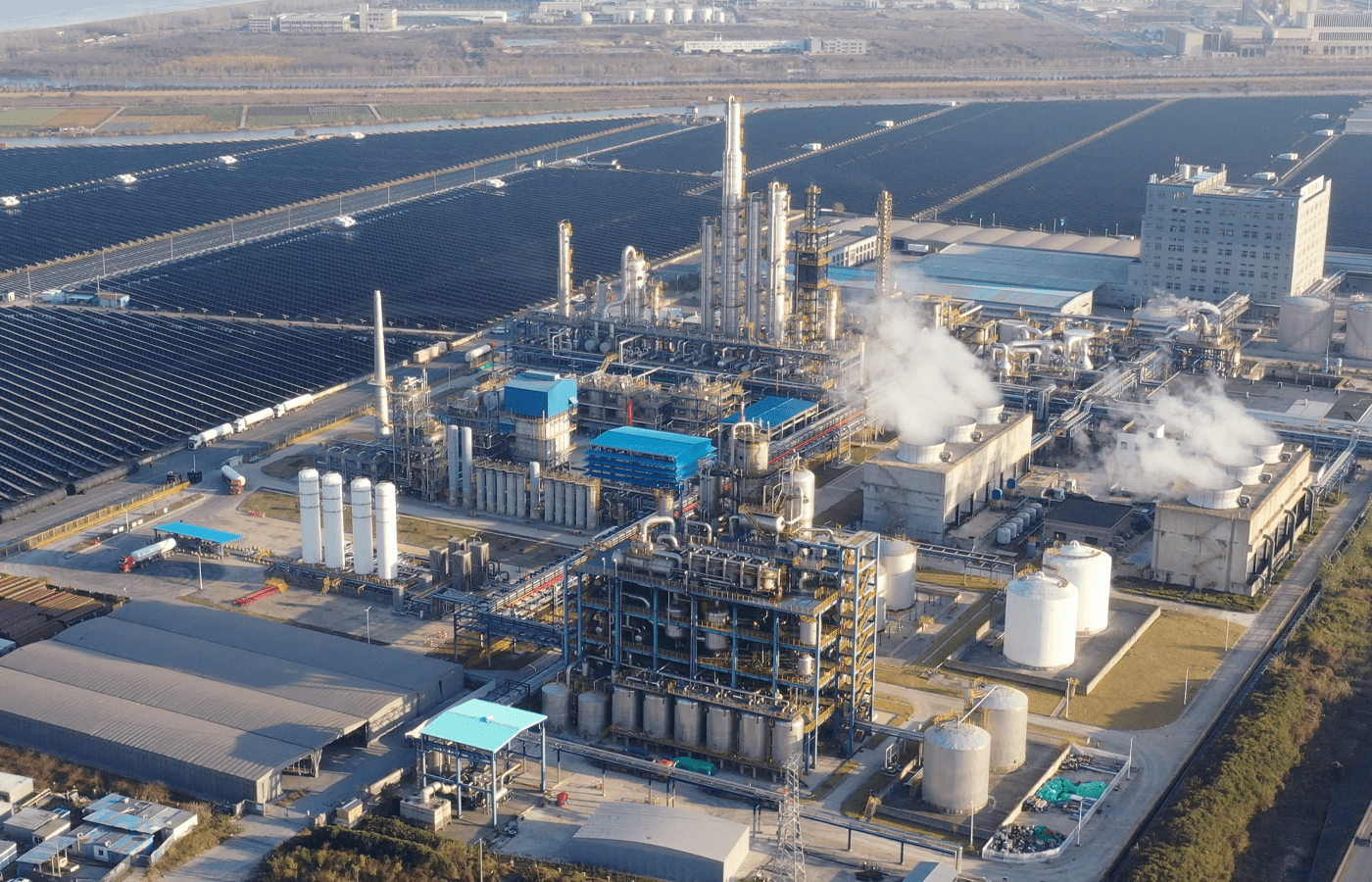
A 20% production increase may sound like a straightforward capacity decision. In one of our expansion programs, it affected 11 plant areas, 170 equipment models and 850 piping systems, requiring 60,000 engineering hours.
This is the challenge facing process industry leaders today. Growth targets, energy costs, technology choices and supply conditions can change quickly, while plant investments remain expensive and difficult to reverse.
Five leadership decisions can help owners use process engineering services to make those investments more resilient.
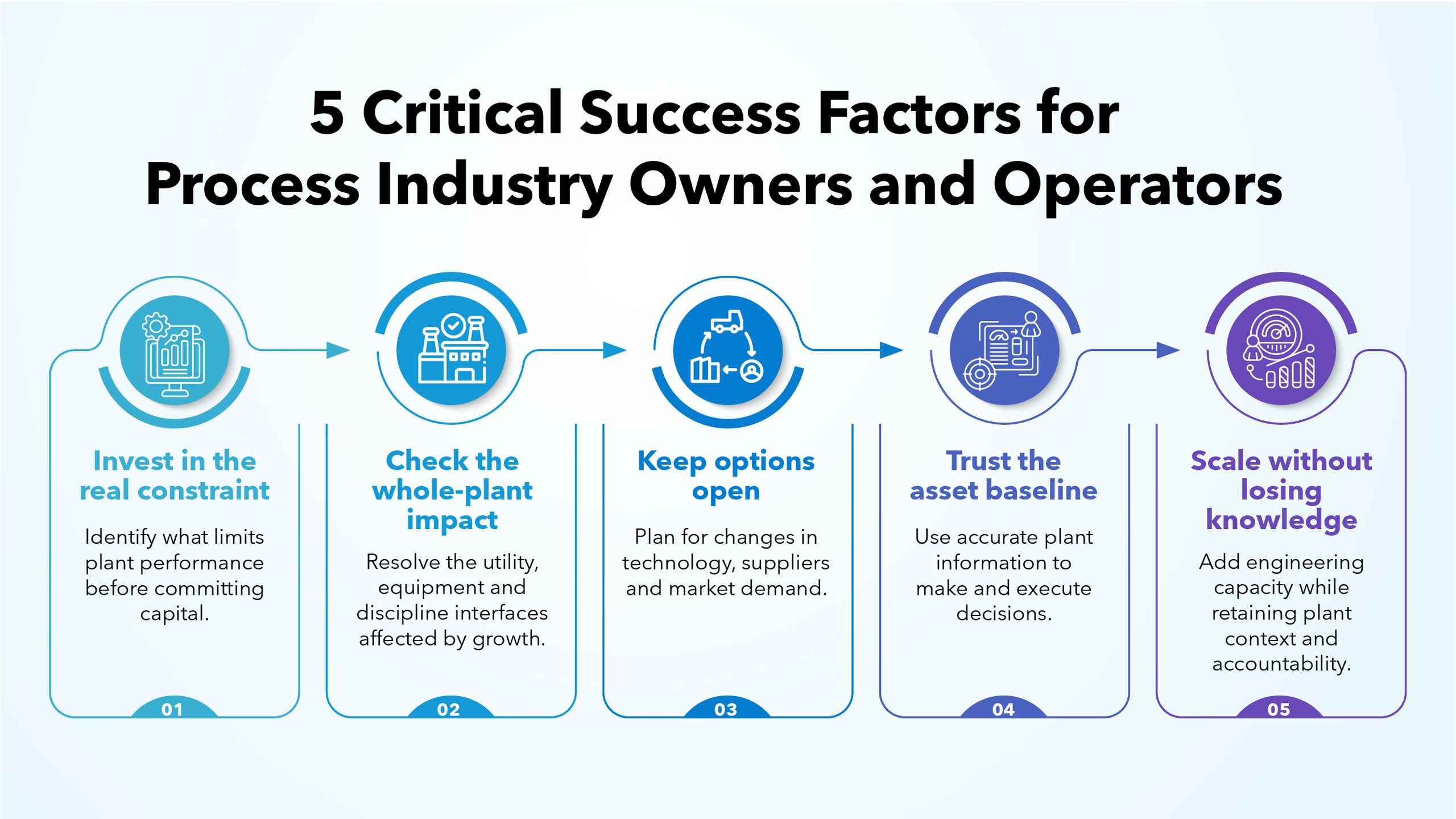
1. Invest in the Constraint That Limits Business Performance
Not every plant needs more production capacity. The real constraint may be energy consumption, asset availability, utility margins, maintenance exposure or limited product flexibility.
Cefic reported European chemical-sector capacity utilization of approximately 74% in Q1 2026, while European gas prices between January and April were 3.3 times US levels. In this environment, adding equipment without addressing the underlying commercial or operational constraint may weaken project economics.
Early process engineering design should help leaders compare options against realistic operating cases, shutdown requirements and production losses. Targeted process optimization services, such as a utility upgrade or reliability intervention, may generate more value than a larger capacity project. The priority is to invest where performance can actually be unlocked.
2. Ensure Growth in One Area Does Not Create Constraints Elsewhere
Production expansion affects much more than the principal equipment.
In the 20% expansion program referenced earlier, the work extended across process, mechanical, piping, civil, structural, electrical and instrumentation disciplines. A higher process duty changed utility requirements, equipment loads, piping arrangements and control-system needs.
Without coordinated plant engineering services, an investment can remove one bottleneck while introducing another. For leadership teams, engineering progress should therefore be measured by more than drawings completed. A better measure is how much installation and operating uncertainty has been resolved. Shared design assumptions, clear interface ownership and multidisciplinary reviews help ensure that the expanded plant can perform reliably across its intended operating range.
3. Preserve Flexibility as Markets and Technologies Change
Investment decisions are increasingly being made while technology pathways, supplier availability and commercial assumptions remain uncertain.
The IEA’s Global Hydrogen Review 2025 showed that potential low-emissions hydrogen production from announced projects for 2030 had fallen from 49 million to 37 million metric tons annually following delays and cancellations. This illustrates how quickly an emerging investment landscape can shift.
Owners need execution strategies that allow projects to progress without fixing every decision too early. Modular delivery can help when package boundaries and interfaces are clearly defined. On an advanced-recycling facility, our engineering scope covered 63 modules and reached issued-for-construction status within seven months.

Modularization can improve execution flexibility, but its value depends on disciplined engineering project management across connection points, structural loads, routing and site integration. The same applies when suppliers change. A lower equipment price can be offset by redesign, additional utilities or longer installation time.
Flexibility has business value only when the cost and consequences of change remain visible.
4. Treat Asset Information as a Business-Critical Resource
Brownfield uncertainty often begins with a simple problem: the plant does not fully match its engineering records.
Undocumented changes increase the time required to evaluate new investments, reduce estimate confidence and create avoidable construction risk. A 3D model may confirm physical conditions, but owners also need reliable information on materials, operating limits and previous modifications.
Trusted asset information strengthens process plant lifecycle management by enabling:
- Faster evaluation of investment options
- More reliable project estimates
- Better-planned shutdowns
- Stronger management of change
- Reduced construction uncertainty
In one process-technology facility expansion, our work combined piping-specification validation, P&ID updates and multidisciplinary 3D modeling with approval and construction packages. The result was a more dependable technical baseline for project decisions and execution.
5. Scale Engineering Capacity Without Losing Plant Knowledge
Engineering demand changes across the asset lifecycle. A plant may need a small team for ongoing modifications, followed by significantly greater capacity during an expansion or turnaround.
Maintaining permanent peak capacity is inefficient. Rebuilding the team for every project can lead to lost knowledge, repeated onboarding and inconsistent decisions.
A hybrid process engineering outsourcing model provides an alternative. A consistent team retains knowledge of the plant, standards and previous decisions, while additional specialists are introduced for defined programs. This gives owners the ability to scale engineering capacity while protecting continuity, accountability and technical knowledge.
Better Visibility Creates Better Investment Decisions
At TAAL Tech, we help owner-operators connect business priorities with multidisciplinary plant engineering design services across ongoing modifications, brownfield programs, asset information and management-of-change requirements.

Leaders cannot remove every variable from an uncertain investment environment. They can improve visibility into the constraint being addressed, the wider plant impact and the flexibility available if assumptions change.
The starting question is simple: